
If you've ever made a vegan olive oil cake without eggs, you probably know the problem: it can be deliciously fragrant but too easily turn dry, dense, or crumbly.
This traditional Greek vegan cake, called "Fanouropita," takes a different approach.
Made with olive oil, orange juice and zest, sweet wine, cinnamon and cloves, this Greek fasting cake is naturally egg-free and dairy-free. But the real secret isn't simply the ingredients. It's how you mix the batter and, especially, how you bake it.
Jump to:
Fanouropita at a glance
Cuisine: Greek
Course: Dessert/cake
Diet: Vegan, dairy-free, egg-free
Preparation time: About 10 minutes
Baking time: About 1 hour-1 hour 10 minutes, depending on the oven
Difficulty: Easy
Best for: Saint Fanourios Day, Greek Orthodox fasting periods, or simply an aromatic afternoon cake
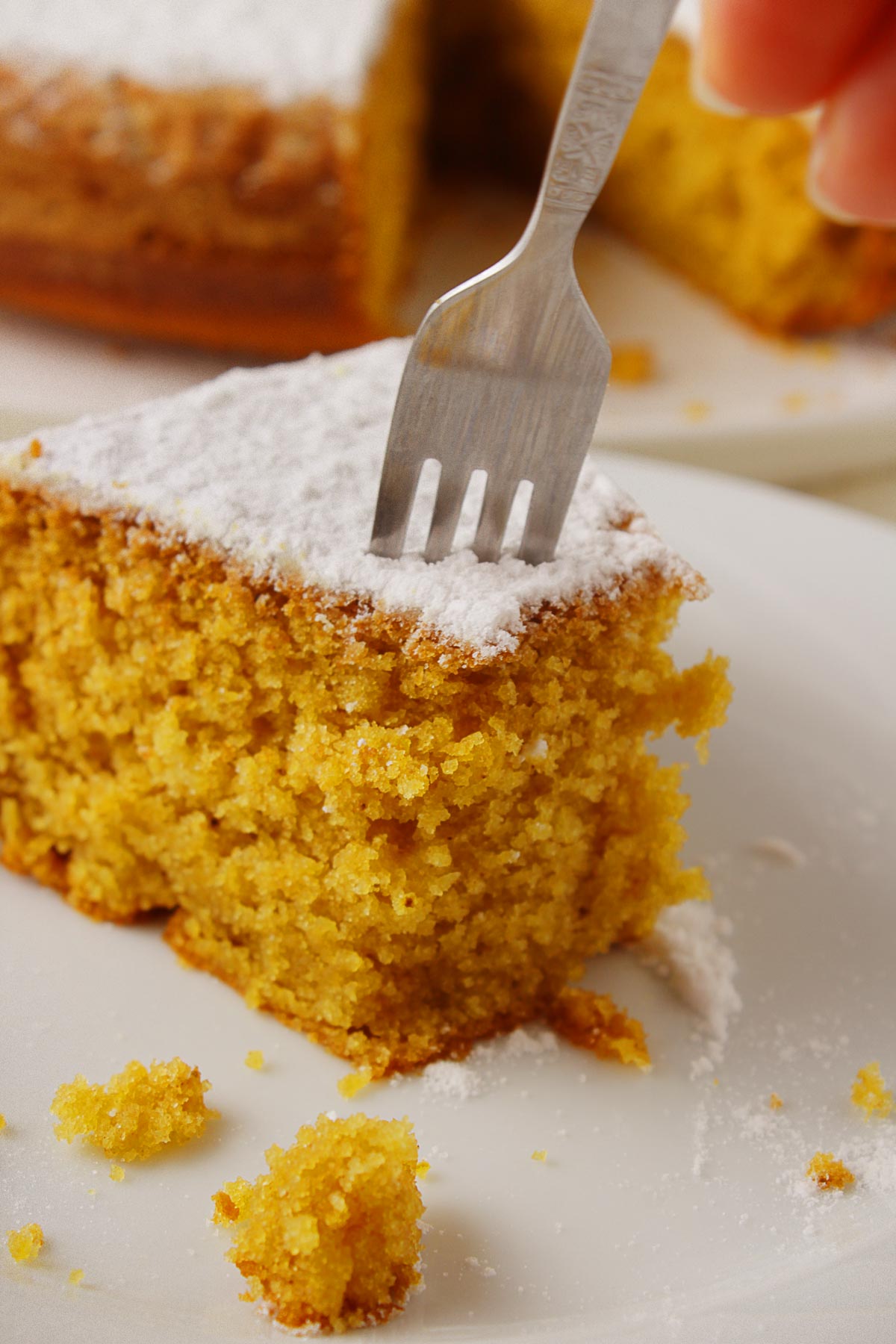
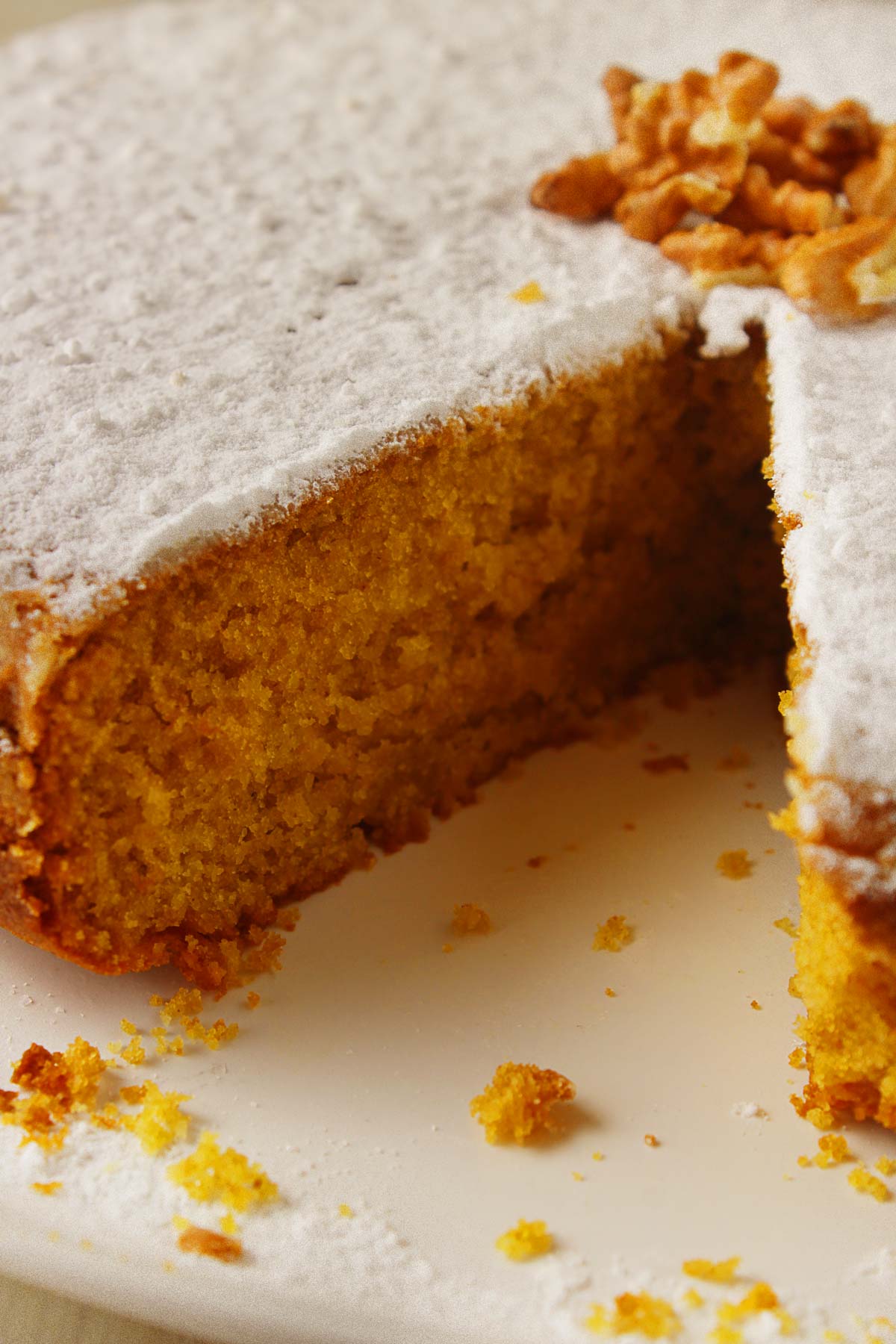
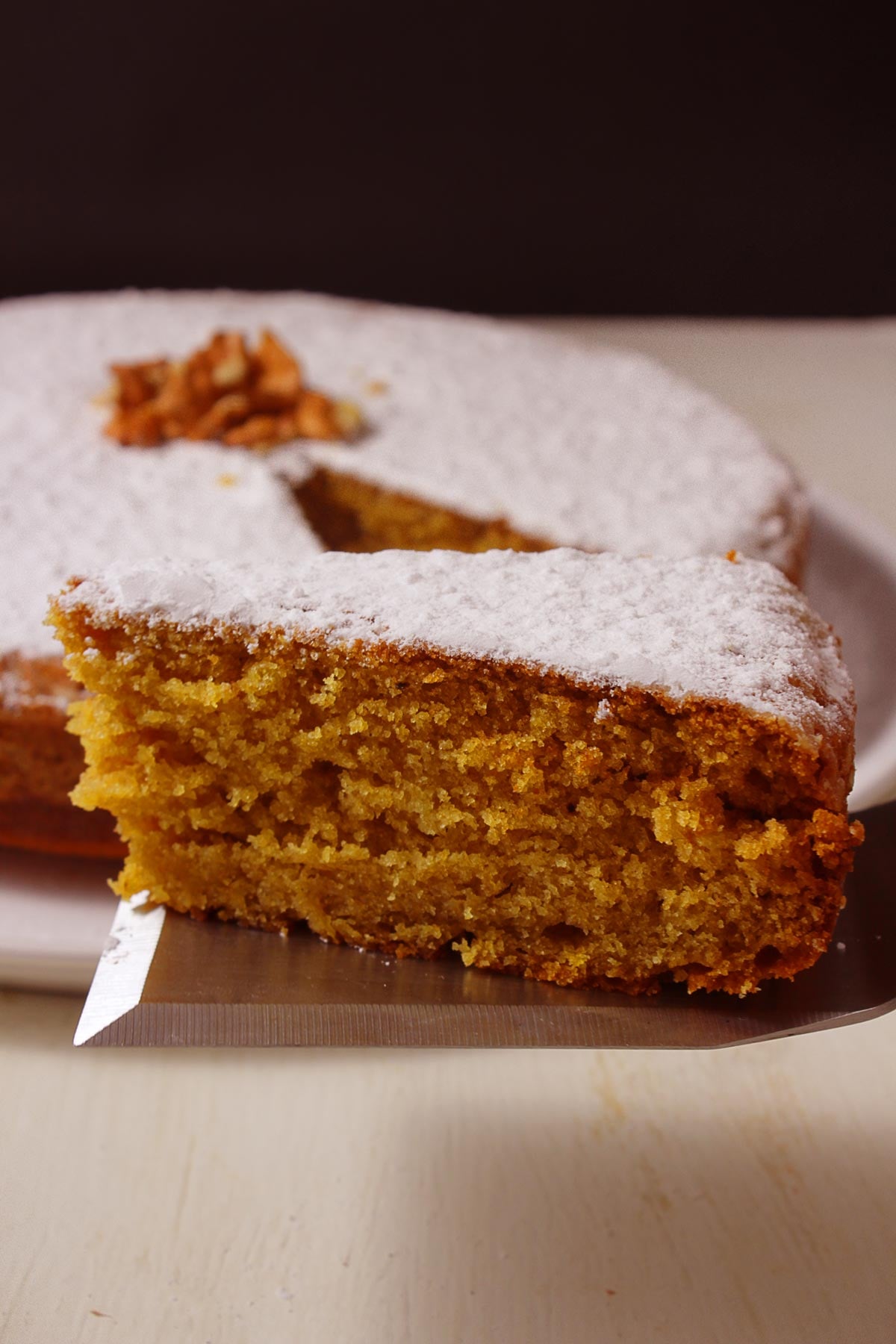
Texture: Moist, tender and lightly crumbly but never dry
Flavor: Orange, cinnamon, cloves and sweet wine
What is fanouropita
"Fanouropita (φανουρόπιτα)" is a traditional Greek cake associated with "Saint Fanourios", whose feast day is celebrated on August 27.
It is a fasting cake, traditionally made without eggs and dairy, and is commonly prepared with an odd number of ingredients: most often seven or nine. Recipes vary considerably from household to household and region to region.
The cake is traditionally brought to church to be blessed and then shared with family, friends, and the wider community. It is particularly associated with asking Saint Fanourios to help reveal something that has been lost or to provide guidance in finding something you need (a love, a job, etc).
And despite its religious and cultural significance, Fanouropita is also simply a very good Greek cake: fragrant with orange and warm spices, lightly sweet, and particularly good alongside Greek coffee. We love it so much that we make it all year long.
So, not only do you get to enjoy a delicious piece of cake, but you also get a little heavenly help from Saint Fanourios. A delicious cake and a little divine assistance? I'd call that a pretty excellent deal!
Why this Greek vegan cake works
Fanouropita is a little different from a conventional cake because there are "no eggs or dairy" to provide structure, richness, and moisture.
That makes the technique particularly important. This recipe not only doesn't need a mixer, but we have to whisk lightly, especially after the flour's addition. Minmum effort, maximum flavor!
Now pay attention because I will reveal all the secrets to success.
The first key is the sugar. It needs to dissolve thoroughly into the oil so the mixture becomes creamy rather than leaving coarse sugar crystals throughout the batter.
The second is the flour. Once it goes into the bowl, the batter should be mixed only until combined. Overmixing develops gluten and can turn this delicate eggless cake elastic and tough.
The third is the baking process. Fanouropita needs enough time to cook through, but too much heat or too much time will rob it of moisture and leave you with the dry, crumbly texture we're trying to avoid.
💡Don't judge this recipe by the ingredient list alone. The technique is what makes the difference!
The tradition behind fanouropita
Saint Fanourios is traditionally associated with lost things and with revealing or bringing something hidden to light.
His name is connected in Greek with the verb "φανερώνω" (fanerono), meaning "to reveal" or "to make something known." The tradition of baking Fanouropita grew around this association.
Saint Fanourios is commemorated by the Greek Orthodox Church on August 27, and Fanouropita is especially associated with this feast day. Greek Orthodox churches may receive the cakes to be blessed before they are shared.
People also make Fanouropita at other times of the year when asking Saint Fanourios for help or guidance.
Traditionally, Fanouropita is made with an odd number of ingredients, most commonly seven or nine.
Different explanations are associated with these numbers. They are commonly connected with elements of Orthodox Christian tradition, including the seven sacraments and the nine angelic orders. Some sources also connect seven with the days of Creation.
Very little is known with certainty about the historical life of Saint Fanourios.
According to tradition, his icon was discovered in Rhodes centuries after his death. The icon, found among the ruins of an old church, depicts a young martyr surrounded by scenes of his suffering. The inscription identified him as Saint Fanourios. Because his identity was essentially "revealed" through the discovery of the icon, he became closely associated with lost things and with revelation.
Some stories about Saint Fanourios' mother are also traditionally connected with Fanouropita. However, these stories are not established historical facts, and even church sources distinguish them from what is actually known about the saint.
The ingredients you need
The ingredients are very common and, most likely, are in your pantry and fridge right now! So, no excuses! Go on, you know what to do!
Olive oil: Use a mild olive oil rather than a strongly peppery extra-virgin olive oil (keep for the Greek salad). Fanouropita contains a generous amount of oil, so an assertive oil can dominate the delicate orange and spice flavors.
Many use vegetable oils like sunflower oil, but I don't recommend them. I use them rarely in desserts where olive oil cannot be an option.
Sugar: Superfine or caster (powdered) sugar is ideal because it dissolves more readily into the oil. If your granulated sugar is coarse, you can pulse it briefly in a blender or food processor until finer.
Sweet wine: It gives Fanouropita an additional layer of flavor and works beautifully with orange and warm spices. Use a sweet red or dessert-style wine. If you don't have sweet wine, a substitution is possible, but the flavor will be slightly different (see below for substitutions).
Orange juice and zest: Fresh orange juice is important here. You get both acidity for the baking soda and the characteristic citrus flavor of Fanouropita. Always zest the oranges before squeezing them. The zest contributes a concentrated orange aroma that you simply won't get from juice alone.
Self-rising flour: This recipe uses self-rising flour, which provides much of the cake's leavening. Don't add extra baking powder unless you are deliberately changing the recipe.
Cinnamon and ground cloves: These are the classic warm spices that give Fanouropita its unmistakably Greek character. The combination is aromatic without turning the cake into a heavily spiced dessert. Wait until you bake it, and you will see the aroma!
Raisins and walnuts: These are optional additions in this version. The traditional recipe doesn't call for them, but you can do your thing! Raisins add little pockets of sweetness, while walnuts provide texture and nuttiness. You can also use sesame seeds, which are a traditional-style addition to Fanouropita.
Ingredient variations and substitutions
Can I add other ingredients to fanouropita?
Why not? This won't be the traditional version and my grandmother would greatly disapprove the addition of different dried fruit, nuts and chocolate drops. But, you can add whatever you want, guys. (sorry, grandma!)
Can I use another wine?
If you don't have sweet wine, you can use whatever wine you have in your pantry and dissolve a teaspoon of honey in it. That will work just fine. For this recipe I used dry white wine and I add a generous teaspoon of honey. Perfection! You can also use cognac like Metaxa or orange-flavored liqueur like Cointreau, but expect a slightly different flavor.
Can I use regular flour instead of self-rising flour?
You can, but you would need to adjust the leavening accordingly. So, for 4 cups of flour, add 5 teaspoons of baking powder (that's a lot, I know) and a generous pinch of salt. Since this recipe was developed around self-rising flour, I recommend keeping it if you want the intended result.
Can I use nutmeg or other spices too?
Yes, you can add about ⅓ teaspoon of nutmeg. My clan doesn't like nutmeg in desserts (which is a shame, but, well, what can I do?), so I skip it. If you like it, I recommend adding it to the spice mix. I don't recommend other pices but if you add something else to your spice mix and you liked it, please keep me posted!
How to make fanouropita
Let's make this amazing vegan cake together.
STEP#1 Prepare the oven
For conventional baking, preheat the oven thoroughly to 340°F / 170°C with top and bottom heat. If using a fan-assisted oven, preheat to 320°F / 160°C.
STEP#2 Create the creamy oil-and-sugar mixture
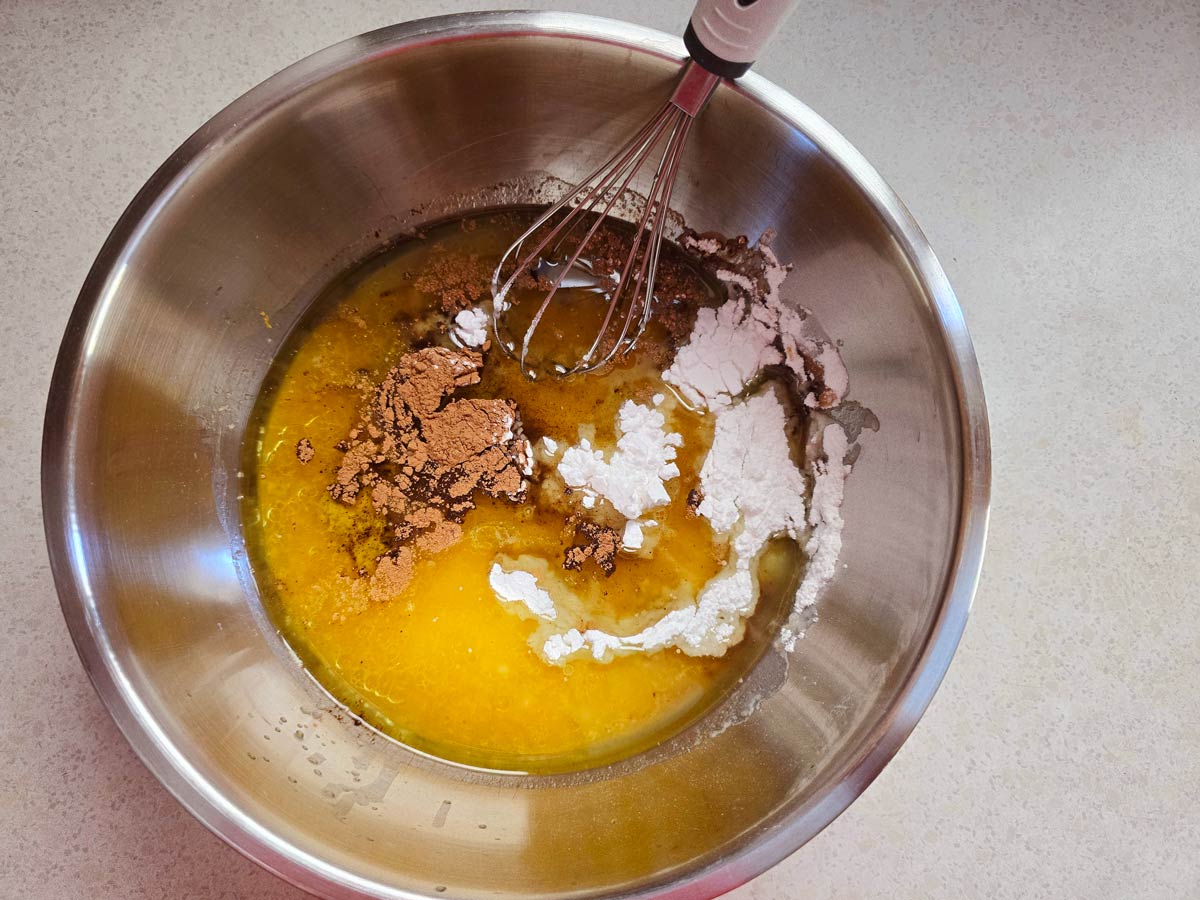
Place the olive oil, sugar, orange zest, and spice mixture in a large mixing bowl. If your sugar is coarse, grind it first until fine. Whisk by hand vigorously for 2-3 minutes, until the sugar has dissolved as much as possible and the mixture becomes creamy. This step deserves your attention.
💡You are not simply combining oil and sugar. You want the sugar to become thoroughly incorporated into the oil before adding the remaining liquid ingredients.
STEP#3 Add the sweet wine
Pour in the sweet wine and whisk until fully incorporated. If you don't have sweet wine, no bother to go to the market for this ingredient. Get the wine from your pantry, dissolve a teaspoon of honey, and you have the same result.
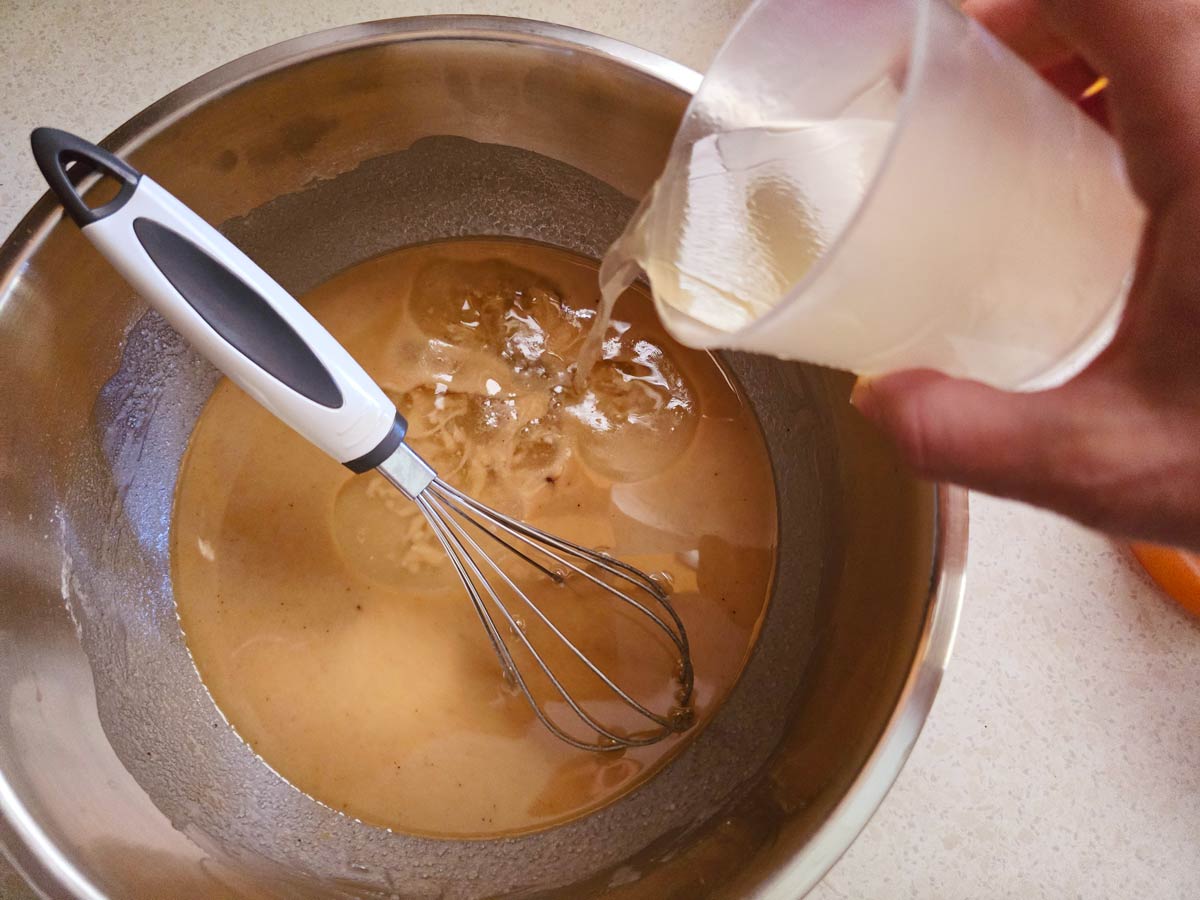
STEP#4 Activate the baking soda
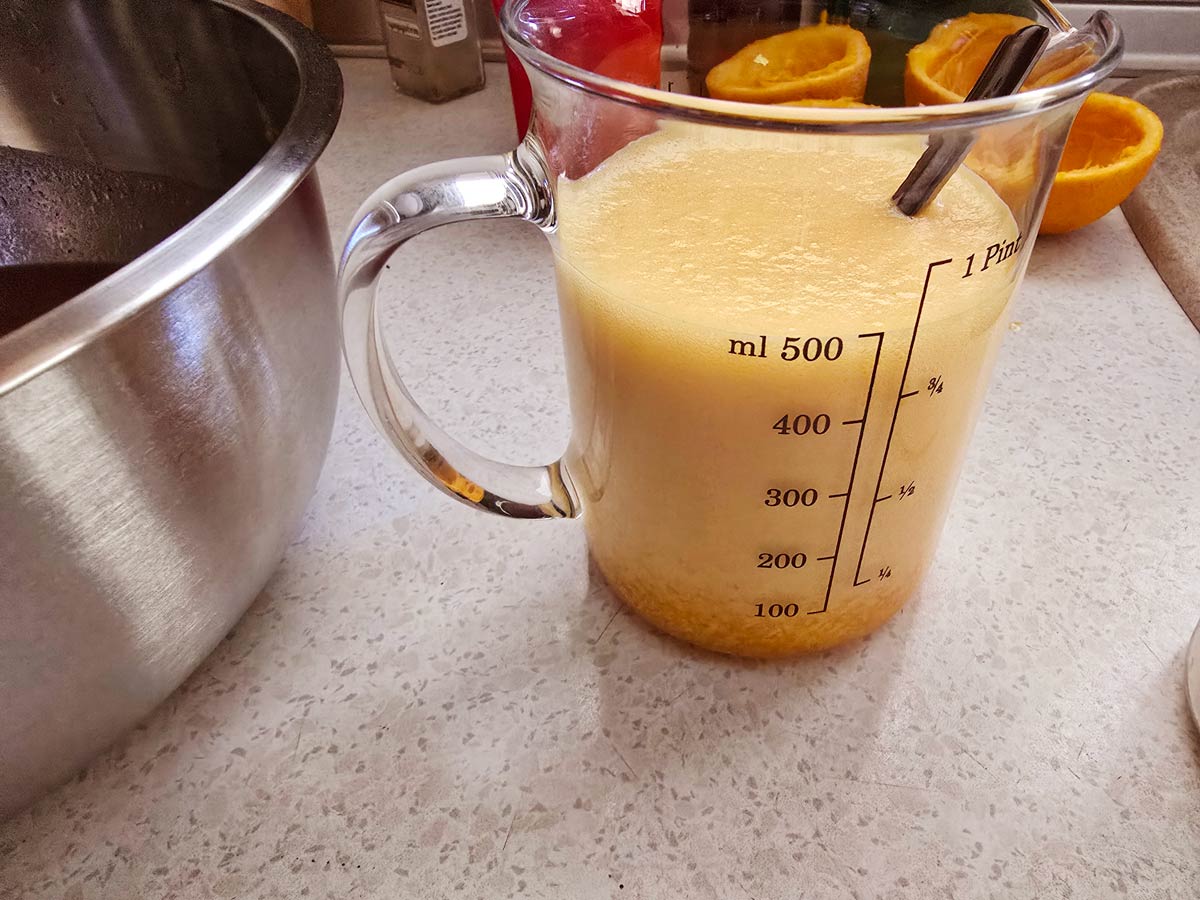
Pour the orange juice into a separate jug. The jug has to be quite big because you are going to stir in baking soda.
BE CAREFUL. Keep the jug right over the bowl with the ingredients. As you stir the soda into the orange juice, the mixture foams because the baking soda reacts with the orange juice's acidity. Whisk just enough to incorporate and add the mixture carefully to the bowl once the foaming begins to settle.
STEP#5 Add the flour
First, don't forget to sift the flour.
Add the self-rising flour gradually. Now change your approach. This is one of the most important points in the entire recipe.
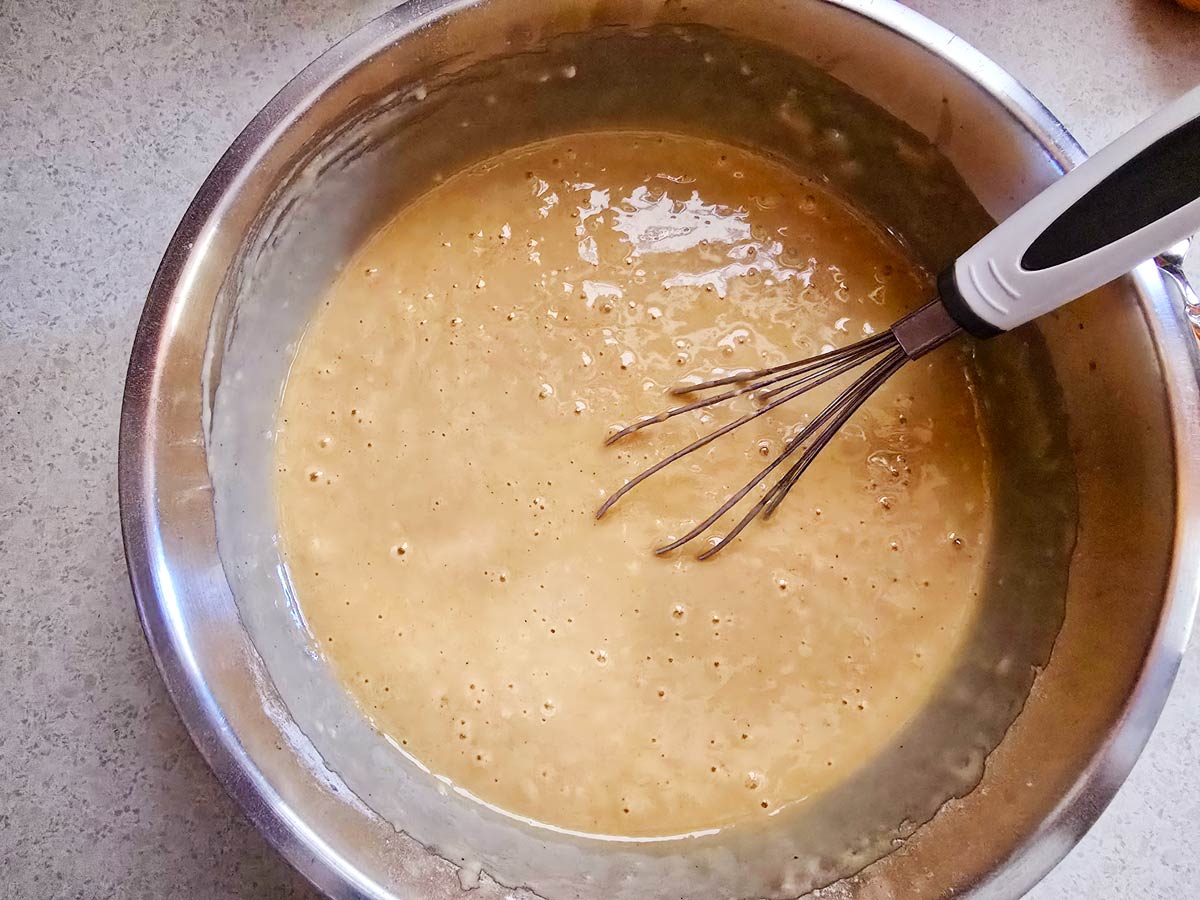
💡Do not beat the batter. Do not keep whisking it until it becomes smooth and stiff. Fold and stir only until the flour has been incorporated. The finished batter should resemble a thick pourable batter or porridge, not a dough.
STEP#6 Add the optional ingredients
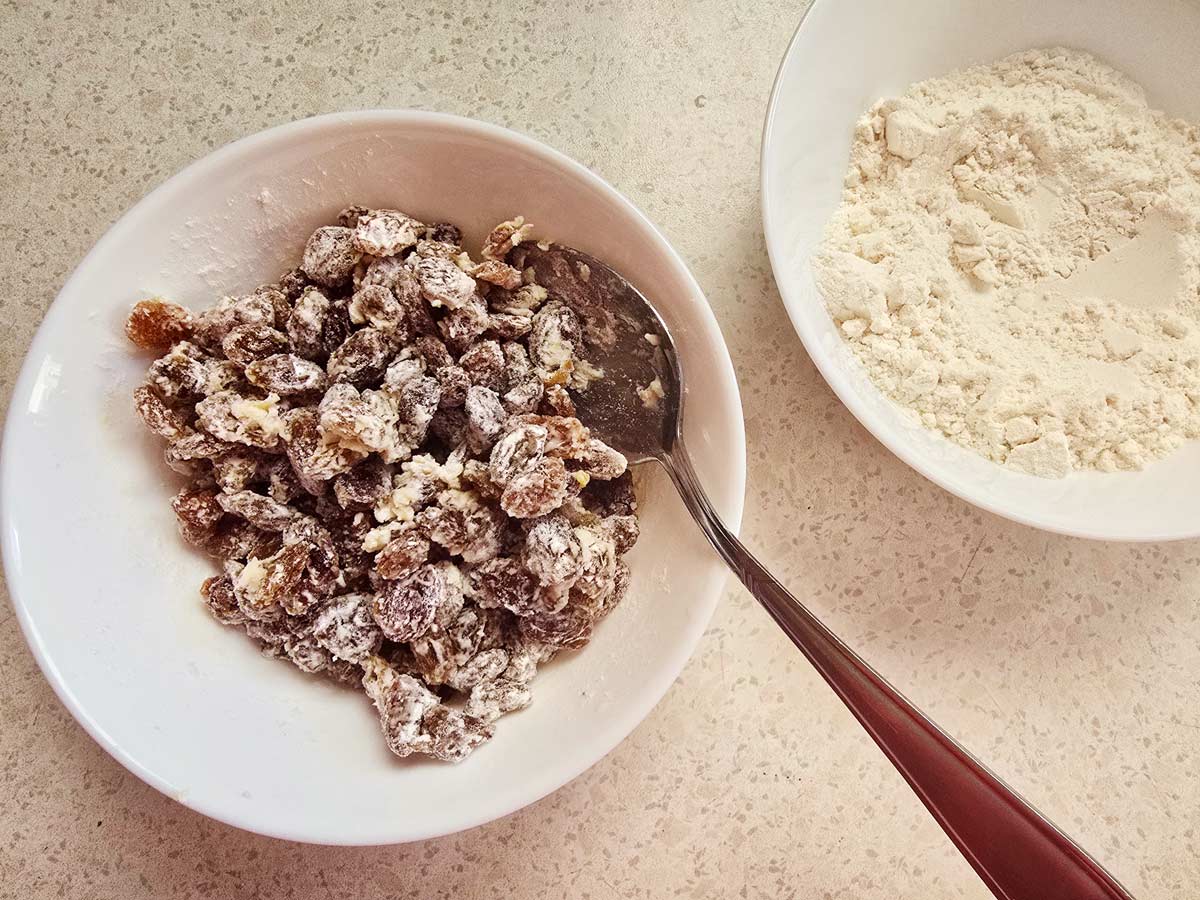
If using raisins and walnuts (or other nuts or dried fruits), you need another easy step to follow. For better distribution, lightly coat them with a little of the recipe's flour (one tablespoon is enough) before adding them. This helps prevent them from sinking to the bottom.
STEP#7 Prepare the pan and transfer the mixture
Use a springform pan, preferably, although a regular cake pan will work as well.
Use an 11 × 7-inch or 12 × 8-inch (about 30 × 24 cm) rectangular baking pan or a 10- to 12-inch (about 26 to 30 cm) round baking pan.
Line the bottom of the pan with parchment paper, trimming it to fit its shape. Lightly grease the sides with a pastry brush (or your fingers), then dust them with flour, turning the pan to coat the sides evenly. Finally, turn the pan upside down and gently tap out any excess flour.
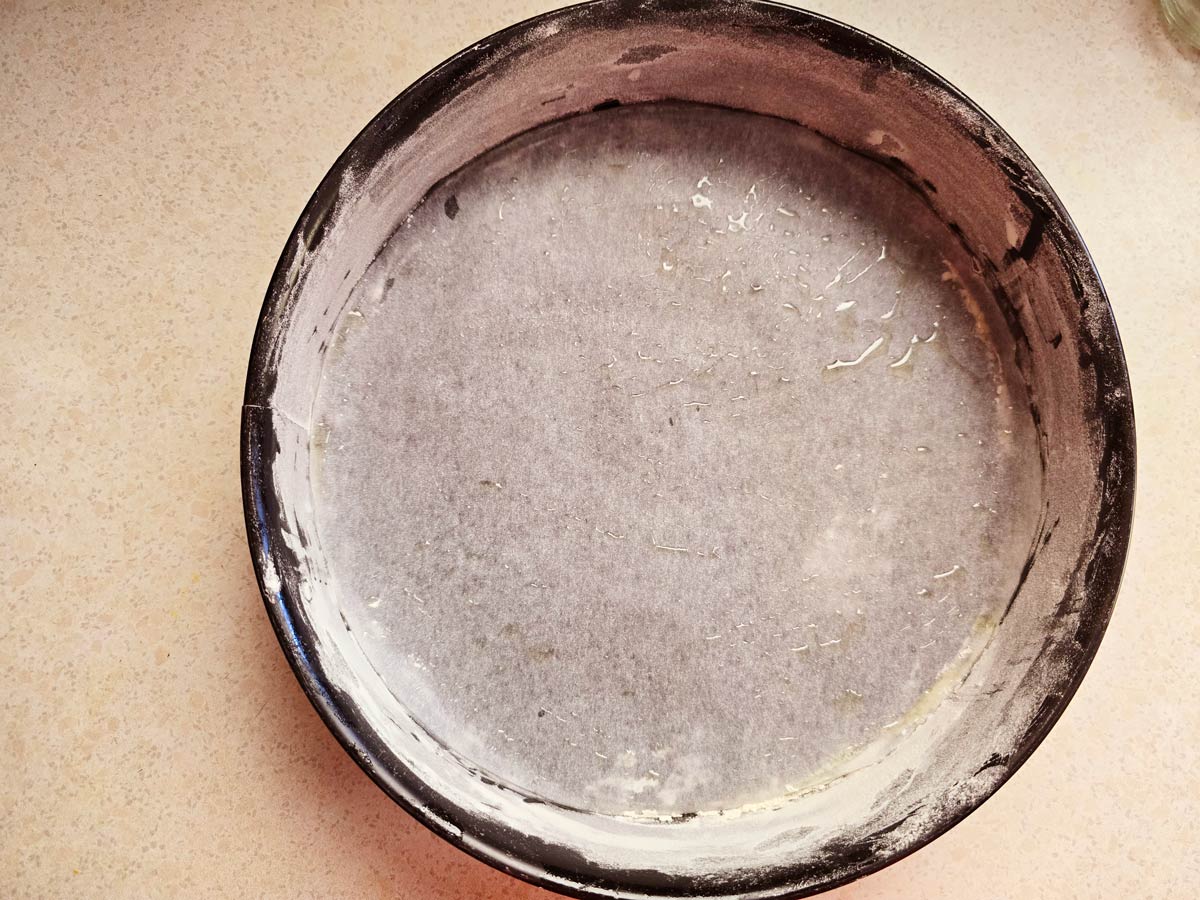
If using sesame seeds, grease the entire pan, coat it with flour, and sprinkle sesame seeds all over it, including the sides, before adding the batter.
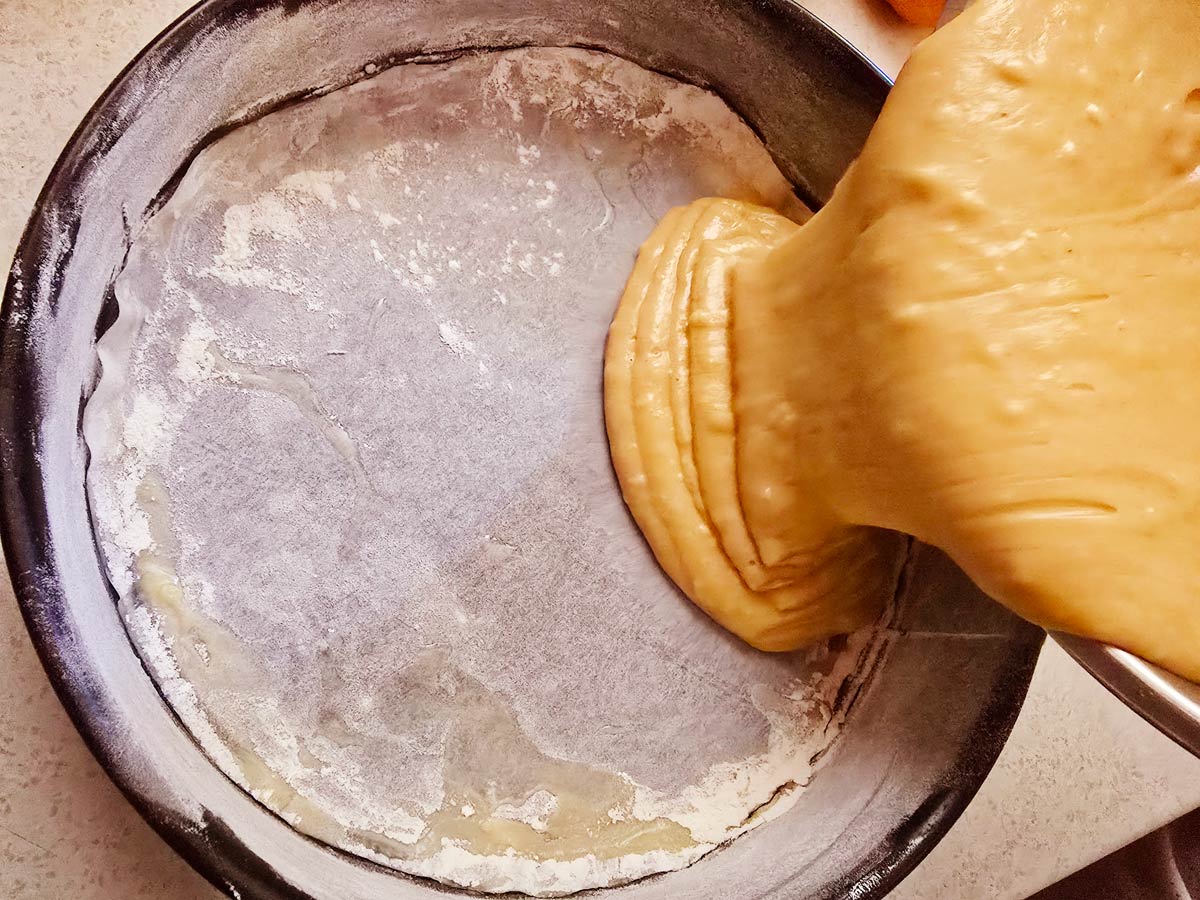
Pour the batter into the prepared pan and spread it gently into an even layer. Gently tap the pan on the countertop 2-3 times to settle the batter evenly.
Don't compact or overwork it.
STEP#7 Bake
Bake on the lower rack at 340°F / 170°C with conventional heat for approximately 1 hour 10 minutes.
For a fan-assisted oven, bake at 325°F / 160°C on the middle rack for about 1 hour.
Ovens vary, so start checking toward the end of the recommended baking time. The cake should have risen significantly and developed a nicely browned surface.
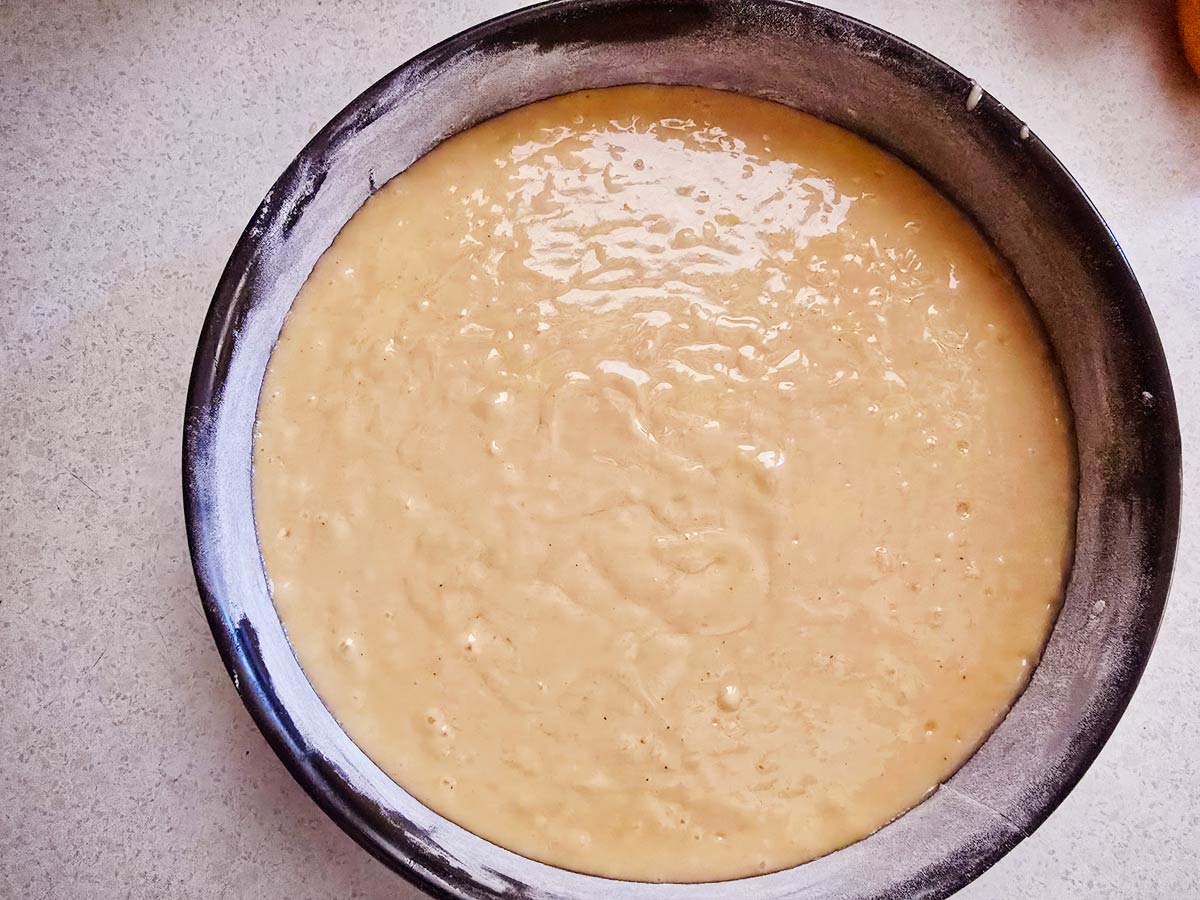
💡Avoid using too high a temperature or baking it for too long, as this can dry it out and result in a dry, crumbly cake. Don't rely on the clock alone. Check the center. Insert a thin knife or skewer into the center. It should come out clean. Remove immediately from the oven.
STEP#8 Cool completely
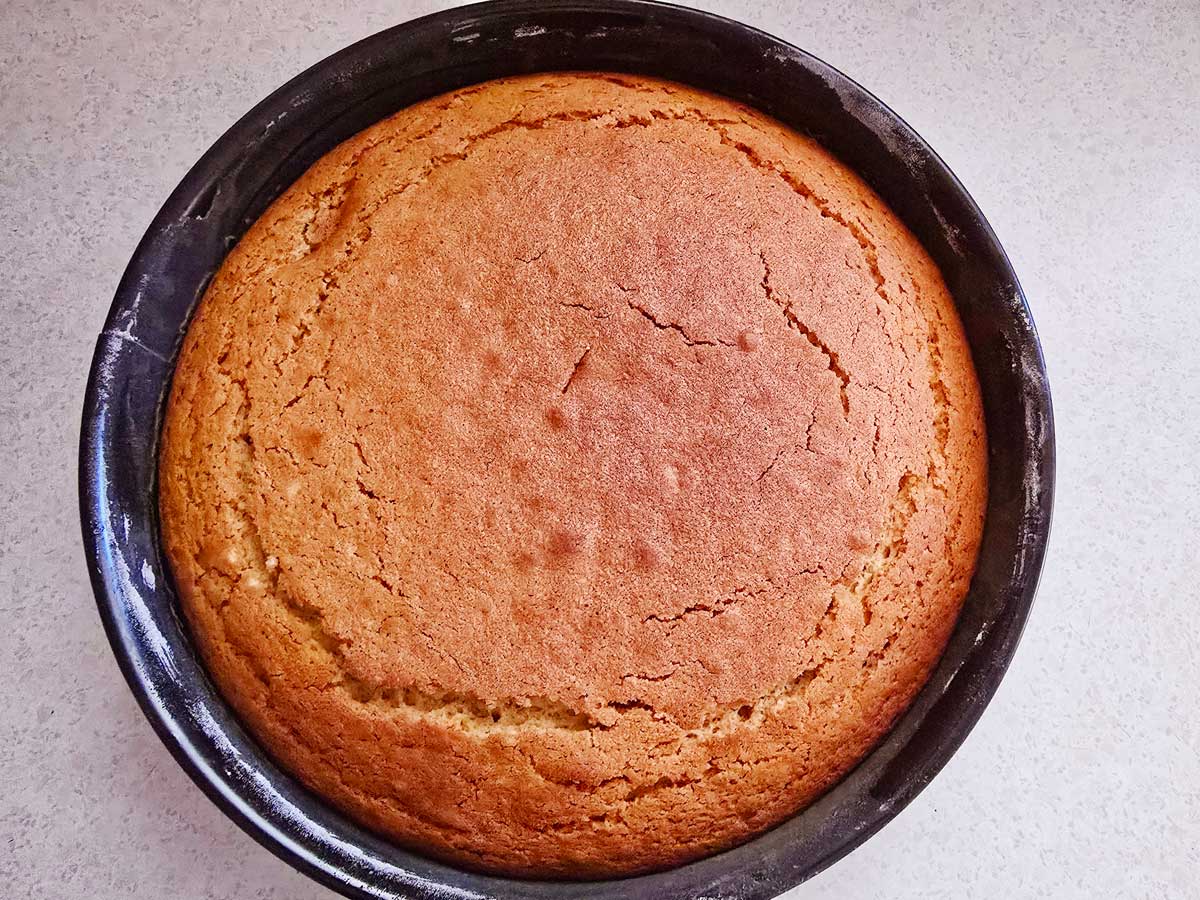
Allow the Fanouropita to cool in the pan for about 15 minutes. If you use a springform pan, release its sides. Place a serving plate over the cake and carefully invert it onto the plate. Gently peel off the parchment paper while the cake is still warm. Set it aside to cool. This method gives the cake a smooth, even surface without cracks, creating the perfect base for adding the topping.
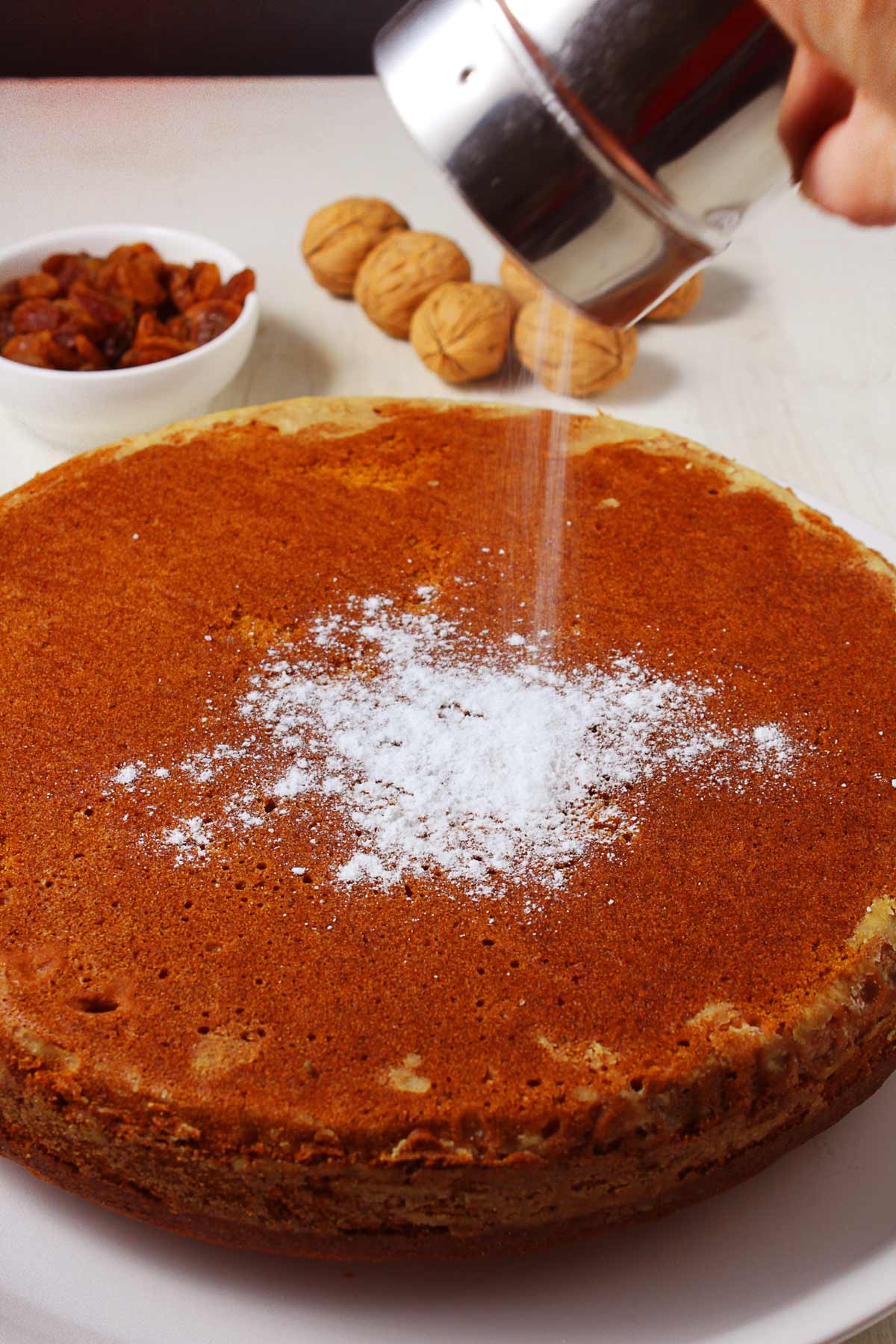
STEP#9 Garnish the cake
Traditionally, a decorative Greek lace doily is placed over the cake and used as a stencil to create a delicate pattern with powdered sugar.
Some people decorate the top with chopped walnuts arranged in the shape of a cross.
Keep in mind, however, that the powdered sugar will eventually absorb moisture and melt, even if the cake is completely cool. It will leave an unattractive damp layer on the top.
💡For the best presentation, dust the cake with powdered sugar just before serving, either whole or after cutting it into individual pieces.
How to prep it ahead
Fanouropita is an excellent make-ahead cake.
In fact, the flavors of orange and warm spices become even more integrated after the cake has rested. Bake it the day before serving if you are preparing it for Saint Fanourios Day or taking it to church to be blessed.
Allow it to cool completely and garnish just before serving.
Storage and freezing
Store fanouropita in an airtight container at room temperature. It should keep well for several days.
Because this is an oil-based cake, it generally stays pleasant for longer than many butter-based cakes, although the exact storage life depends on your room temperature and humidity. (If it is hot -like in Greece- the following day I place it in the fridge to keep it fresh for even more days).
For the best texture, keep it well covered so it doesn't dry out.
Freeze: Cool the cake completely, wrap it well, and freeze it in individual pieces or as a whole cake without powdered sugar.
Thaw it completely at room temperature before serving and garnish/dust it after thawing.
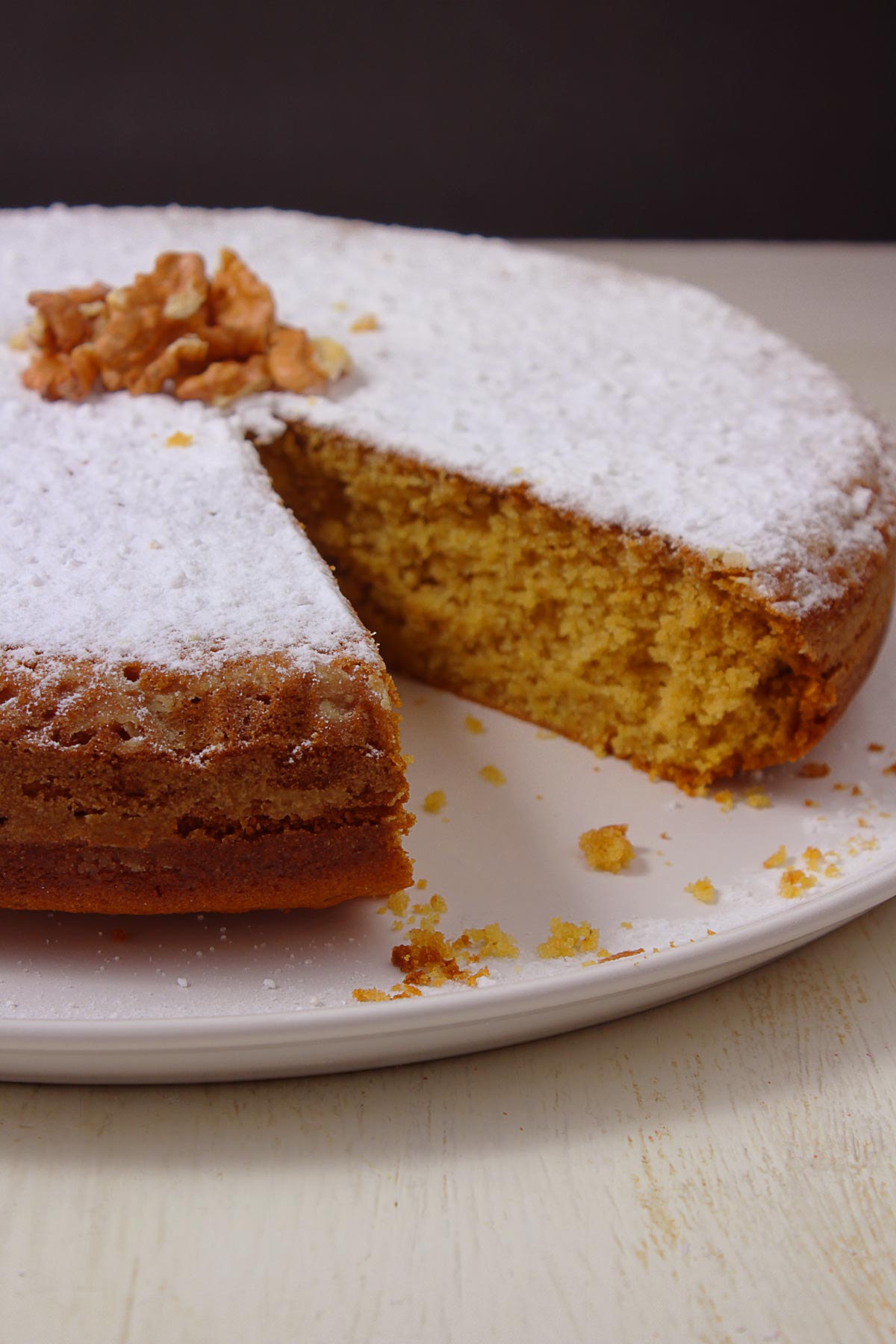
How to serve fanouropita
You don't need anything elaborate.
The simplest and probably most Greek way to serve Fanouropita is with a cup of Greek coffee. It is an excellent breakfast, snack, dessert, or afternoon sweet when friends drop by.
Cut it into small squares or wedges, dust lightly with powdered sugar, if you like, and serve it.
And if you've made it for Saint Fanourios, the traditional context matters just as much as the cake itself: it is commonly taken to church for a blessing and then shared.
More vegan and symbolic Greek recipes
If you enjoy exploring Greek recipes with a strong connection to tradition and celebration, here are a few more worth trying:


You will find the following recipes in my Christmas eBook:
Christopsomo (Greek Christmas Bread) - A festive Christmas bread traditionally prepared in Greek homes and often decorated with meaningful symbols.
Vasilopita (Greek New Year's Cake) - A New Year tradition with a little surprise inside: a hidden coin. Finding it in your slice is said to bring good fortune for the year ahead.
If you want more vegan recipes, make the following:


Recipe
Greek Vegan Cake - Fanouropita
Ingredients
- 1 ¼ cups (280 ml) mild olive oil
- 1 ½ cups (290 g) superfine/caster sugar
- ½ cup (120 ml) sweet wine or dessert-style wine
- 1 ⅓ cups (330 ml) fresh orange juice and zest from 2 oranges
- 1 teaspoon baking soda
- Spice mixture: 1 teaspoon ground cinnamon and ⅓ teaspoon ground cloves
- 4 cups (about 500 g) self-rising flour, sifted
Optional Ingredients
- ¾ cup (140 g) raisins
- 1 cup (120 g) finely chopped walnuts
- ⅓ cup (60 g) sesame seeds
- ⅓ teaspoon ground nutmeg
Garnish
- Powdered sugar
- Chopped walnuts
- Sesame seeds
Instructions
Prepare the oven and the baking pan
- Preheat the oven to 340°F / 170°C with conventional top-and-bottom heat, or 320°F / 160°C fan-assisted
- Use a springform pan or a regular cake pan. Use an 11 × 7-inch or 12 × 8-inch (about 30 × 24 cm) rectangular baking pan or a 10- to 12-inch (about 26 to 30 cm) round baking pan.
- Line the bottom of the pan with parchment paper, trimming it to fit its shape. Lightly grease the sides with a pastry brush (or your fingers), then dust them with flour, turning the pan to coat the sides evenly. Finally, turn the pan upside down and gently tap out any excess flour.
- If using sesame seeds, grease the entire pan, coat it with flour, and sprinkle sesame seeds all over it, including the sides.
Make the cake batter
- Add the olive oil, sugar, orange zest, and spices to a large bowl. Whisk vigorously until the sugar has dissolved as much as possible and the mixture looks creamy.
- Add the sweet wine and whisk until incorporated.
- In a separate big jug, combine the orange juice and baking soda. Keep the jug right over the bowl with the ingredients. As you stir the soda into the orange juice, the mixture foams up, and there is a risk of overflow. Add it carefully to the bowl once the foaming begins to settle. Whisk just enough to incorporate it into the oil-and-sugar mixture.
- Don't forget to sift the flour before adding it to the mixture. For self- rising flour, place a sifter over the bowl and sift the indicated amount of flour. If you turn all-purpose flour into self-rising, mix the flour with 5 teaspoons of baking powder and a pinch of salt.
- Add the self-rising flour gradually, mixing gently only until incorporated. The batter should be loose and pourable, not stiff.
- If using raisins and walnuts, lightly wet them with water or orange juice and coat them with a little flour. Gently fold them into the batter. Don't overmix.
- Pour the batter into the prepared pan and spread it gently into an even layer. Gently tap the pan on the countertop 2-3 times to settle the batter evenly. If using sesame seeds, sprinkle them over the surface as desired.
Bake
- Bake on the lower rack at 340°F / 170°C for about 1 hour 10 minutes, or at 320°F / 160°C fan-assisted for about 1 hour.
- The cake should have risen significantly and developed a nicely browned surface. Don't rely on the clock alone. Check the center. Insert a thin knife or skewer into the center. It should come out clean. Remove immediately from the oven.
- Allow the cake to cool in the pan for about 15 minutes. If you use a springform pan, release its sides. Place a serving plate over the cake and carefully invert it onto the plate. Gently peel off the parchment paper (if using) while the cake is still warm. Set it aside to cool.
Garnish
- #1. Traditionally, a decorative Greek lace doily is placed over the cake and used as a stencil to create a delicate pattern with powdered sugar. Alternatively, dust the surface with powdered sugar (like in the photos).#2. Decorate the top with chopped walnuts arranged in the shape of a cross. #3. Sprinkle chopped walnuts or nuts and dried fruits over the powdered sugar surface.
- For the best presentation, dust the cake with powdered sugar just before serving, either whole or after cutting it into individual pieces.
Notes
- You can use vegetable oils like sunflower oil, but it is not recommended because they are too processed.
- If your sugar is coarse, you can pulse it briefly in a blender or food processor until finer.
- You can use whatever wine you have and dissolve a teaspoon of honey in it (obviously not an option for vegans). You can also use cognac like Metaxa or orange-flavored liqueur like Cointreau, but expect a slightly different flavor.
- If you use all-purpose flour, adjust the leavening accordingly. Add 5 teaspoons of baking powder crazy and a generous pinch of salt. Since this recipe was developed around self-rising flour, I recommend keeping it if you want the intended result.
- Store in an airtight container (or wrap it well) at room temperature. It should keep well for several days (If it is hot -like in Greece- the following day I place it in the fridge to keep it fresh for even more days).
- Freeze: Cool the cake completely, wrap it well, and freeze it in individual pieces or as a whole cake. Thaw it completely at room temperature before serving.
Leave a Reply