
These little Greek donuts are proof that simple ingredients can produce serious joy. No fancy equipment. No complicated techniques. Just a bowl of dough, a pot of hot olive oil, and the patience to wait for the first puffed donut to float to the top.
Jump to:
- What are Greek donuts - Loukoumades
- Why this recipe works
- History and tradition of loukoumades
- My Christmas ebook!
- Key ingredients for Greek loukoumades
- Meal prepping this recipe
- Substitutions and variations
- How to make Greek donuts
- Expert tips
- How Greeks serve Greek donuts
- How to serve leftovers
- How to store and freeze
- FAQs
- More similar recipes
- My Christmas ebook!
- Don't be a stranger!
- Recipe
What are Greek donuts - Loukoumades
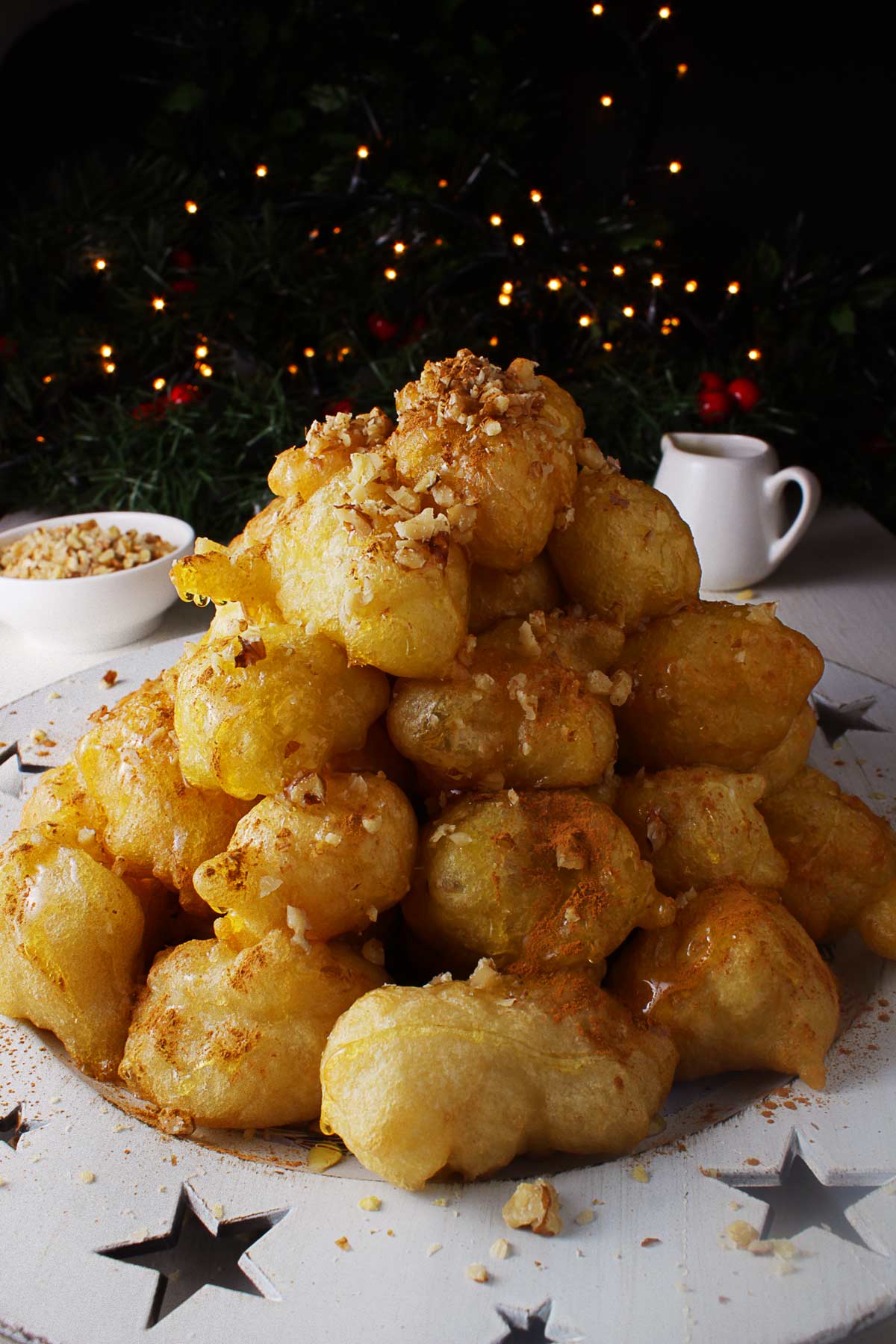
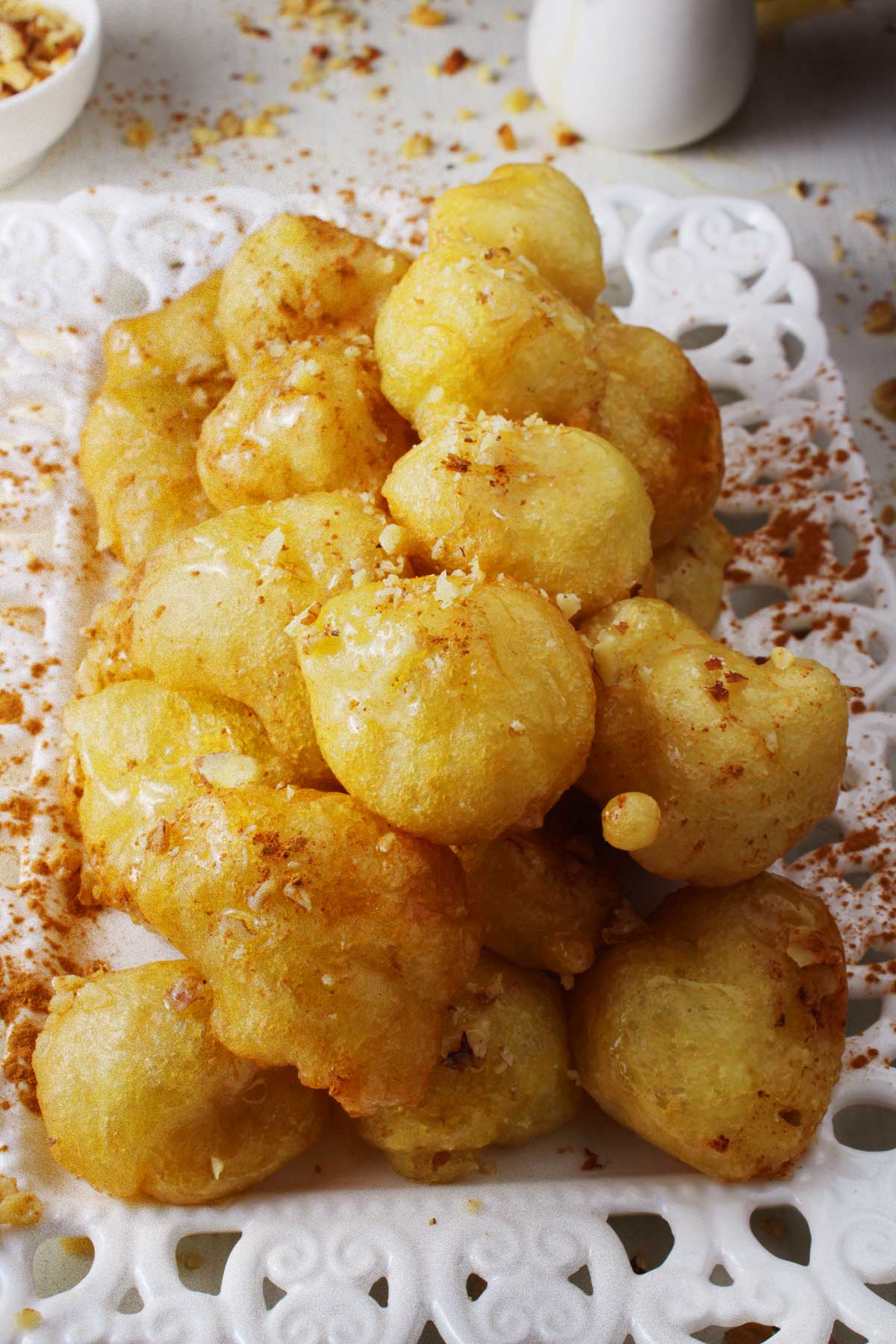
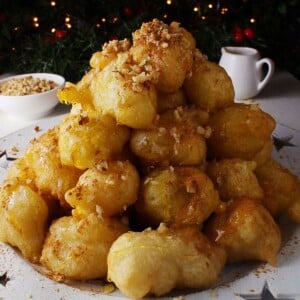
Greek donuts, known as loukoumades, are little golden clouds of fried dough-crisp on the outside, incredibly light and airy within, and traditionally soaked in warm honey that drips down your fingers as you eat them. Their flavor is a beautiful balance of subtle sweetness, floral honey, and a whisper of cinnamon, making each bite comforting and nostalgic.
Though they've been a beloved Greek dessert for centuries, loukoumades have become one of the country's most popular street foods, served fresh and sizzling from busy stalls and cafés. Today, Greeks are obsessed with modern versions drenched in melted chocolate, ice cream, sprinkled with nuts, or filled with luscious creams-proof that this humble, ancient dessert continues to evolve while staying irresistibly delicious. When you visit Greece, you have to taste them while strolling through a place.
There are so many versions of loukoumades and so many methods to make them that almost every house has its own way. However, I'm giving you a light version (vegan, meaning no milk), easy (no stand mixer), with extra puffiness (guaranteed) and faithful to tradition (always)-perfectly crunchy on the outside and soft on the inside (the target).
And yes, the honey drizzle is non-negotiable. We can negotiate about excluding cinnamon and chopped walnuts. I could even be ok topping it with chocolate (not traditional, but, dear God, that's the biggest and most delicious sin), but you totally have to top it with honey, at least. No further discussion!
Why this recipe works
Loukoumades may be a dessert/treat, but the way Greeks prepare and enjoy them follows the spirit of the Mediterranean lifestyle:
Simple ingredients: Flour, yeast, water, honey, cinnamon, and walnuts (optional). No artificial anything. These are the traditional ingredients.
No equipment or any special method: just a bowl, a kitchen whisk, and a pot. That's it!
Balanced occasions: Not an everyday sweet. Loukoumades are for gatherings, celebrations, and those "we're having people over" moments.
Communal eating: They're meant to be shared in the middle of the table while everyone reaches in. A very Mediterranean tradition, which is actually the nightmare of the person who cleans up all these honey drops. But, hey, helping the lady of the house is the right thing to do, right?
It is vegetarian and can easily be vegan: follow the recipe and just replace honey with maple, agave, or date syrup.
History and tradition of loukoumades
Not interested in food history? No problem Jump to Recipe
The rest of you join me on a long trip through the centuries.
An ancient treat
Loukoumades have been around since ancient Greece. Literally. As stated by the ancient Greek poet Callimachus, they were served at the first Olympic Games (which debuted in 776 B.C.) as a "honey token" for winning athletes. Imagine finishing a wrestling match and getting a plate of hot donuts as a prize.
Honestly, I'd compete too, if I were a man, because women weren't allowed to participate (Yes, I know… infuriating…but we are back over 2000 years, so please, don't be too harsh on them).
Over time, loukoumades spread through the eastern Mediterranean, picking up influences from Arabic, Turkish, and Persian kitchens. The concept stayed the same: fried dough + honey. Every culture has its version, but the Greek one remains distinct. Light, puffy, and generously doused with warm honey and cinnamon.
Today, they're enjoyed at festivals, weddings, baptisms, Sunday gatherings, and those lazy afternoons when someone says, "Should we make loukoumades?" and everyone is suddenly in the kitchen.
Traditions and customs
In many Greek regions, Saint Andrew's Day (Nov 30) is closely linked with frying loukoumades, a custom rooted in ancient "first fruits" traditions. As this feast coincides with the arrival of the new olive oil harvest, families symbolically bless and celebrate the fresh oil by frying sweets like loukoumades, fritters, or other local treats.
Saint Andrew is nicknamed Trypotiganas ("the Pan-Piercer") because folklore says he "punctures the pan" of anyone who skips frying something on his feast day. Across Greece, people prepare loukoumades as a warm offering, share plates with neighbors, or take them to church to be blessed. A ritual connected to prosperity, hospitality, and the agricultural cycle.
A Christmas treat
Loukoumades also appear throughout the Christmas season in many Greek regions. Because the batter is naturally plant-based, it fits perfectly into the Nativity fast, making it a popular sweet from mid-November through Christmas Eve.
In places like Rhodes, Crete, Symi, and Karpathos, loukoumades are made as festive treats, served to carolers, offered for blessings, or prepared to bring good luck for the new year. Their simplicity, symbolism, and long-standing connection to winter celebrations have made loukoumades one of Greece's most beloved Christmas-time sweets.

My Christmas ebook!
35 traditional Greek recipes for your Christmas festive table!
Key ingredients for Greek loukoumades
Here's what you'll need for authentic Greek donuts:
For the dough
Flour: All-purpose flour works best.
Yeast: Active dry yeast.
Water: Warm, not hot.
Sugar: Just a little-to help the yeast.
Olive Oil for frying: Any kind of olive oil works for loukoumades. I use our extra virgin olive oil from our harvest, and it is perfect. Don't use vegetable oil like sunflower oil because it is super processed.
For topping
Honey: Fresh or slightly warmed just enough to drizzle.
Cinnamon: Traditionally used.
Chopped walnuts: Optional but delicious.
Other nuts or seeds: Almonds, sesame, pistachios, etc.
Meal prepping this recipe
You can't fully meal-prep loukoumades (they're best fresh), but you can prep smartly somehow:
Mix the dough earlier: The dough can rise for 1-2 hours or rest in the fridge overnight. If it rests in the fridge for a couple of hours. The dough shouldn't be cold, but at room temperature, before frying it.
Prepare toppings: Chop the nuts like walnuts, almonds, pistachios, etc.
Set up the frying station: Olive oil in a pot, a draining rack/bowl with paper towels, a slotted spoon, and… ready to go.
This way, when guests arrive, you just fry and serve.
Substitutions and variations
Gluten-free option: Use a gluten-free all-purpose flour blend with xanthan gum. Texture changes slightly, but it's still good.
Vegan loukoumades: Loukoumades are naturally vegan-no dairy, no eggs. Just make sure your honey substitute is maple, agave, grape molasses (petimezi), or date syrup.
Flavor the dough: A few drops of vanilla, or mastic (mastiha), or orange or lemon zest work beautifully.
Different Toppings: Here is a list of various toppings.
All kinds of nuts and seeds: crushed walnuts, almonds, pistachios, sesame, etc.
Melted chocolate (not traditional, but a must for chocolate lovers).
A sprinkle of powdered sugar.
A drizzle of grape molasses (petimezi).
How to make Greek donuts
Let's make these delicious Greek donuts together:
1. Activate the yeast: Whisk water, sugar, and yeast until dissolved; let sit briefly until foamy.
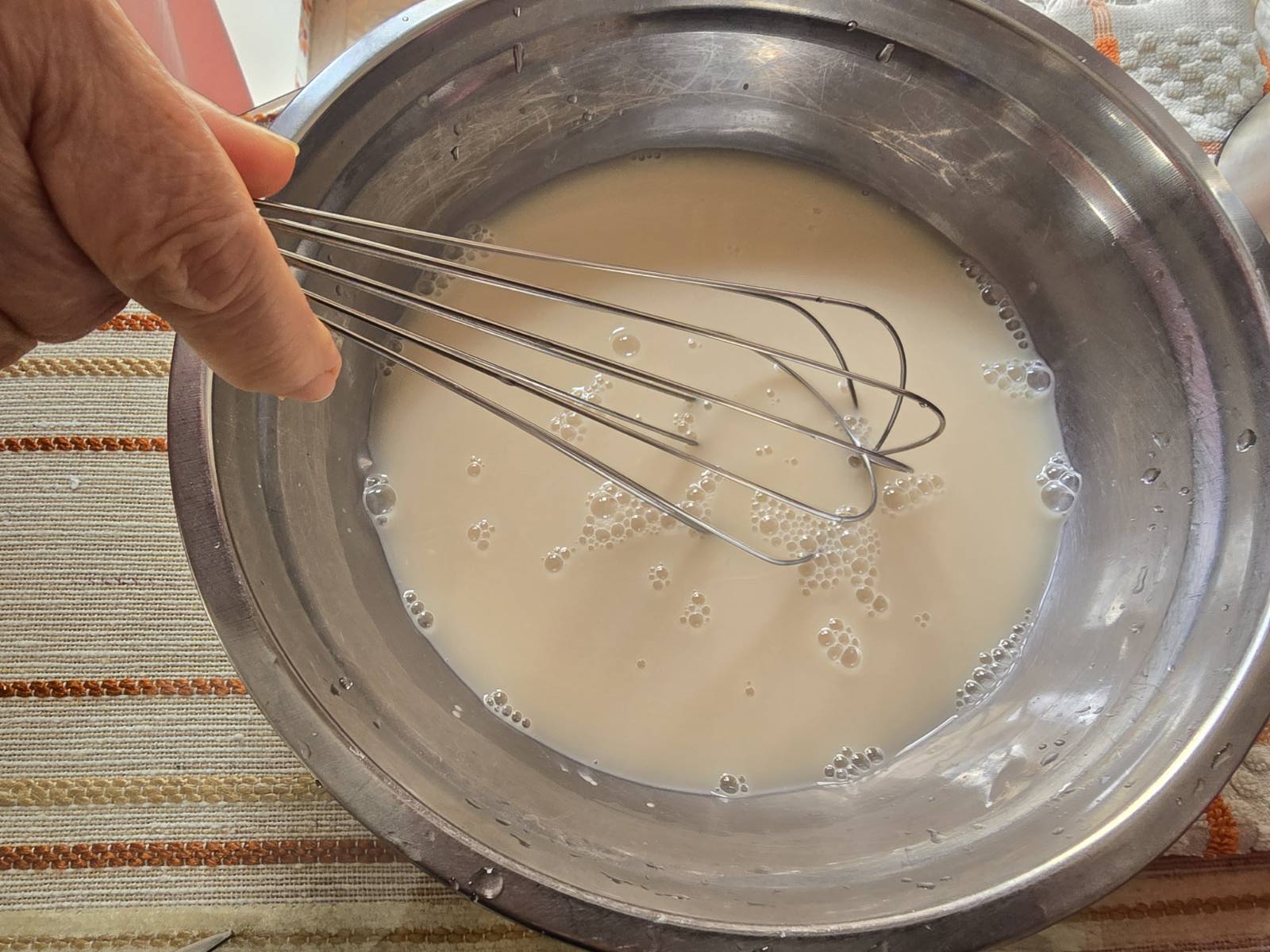
2. Make the batter: Whisk the remaining dough ingredients into the yeast mixture until perfectly smooth and lump-free.
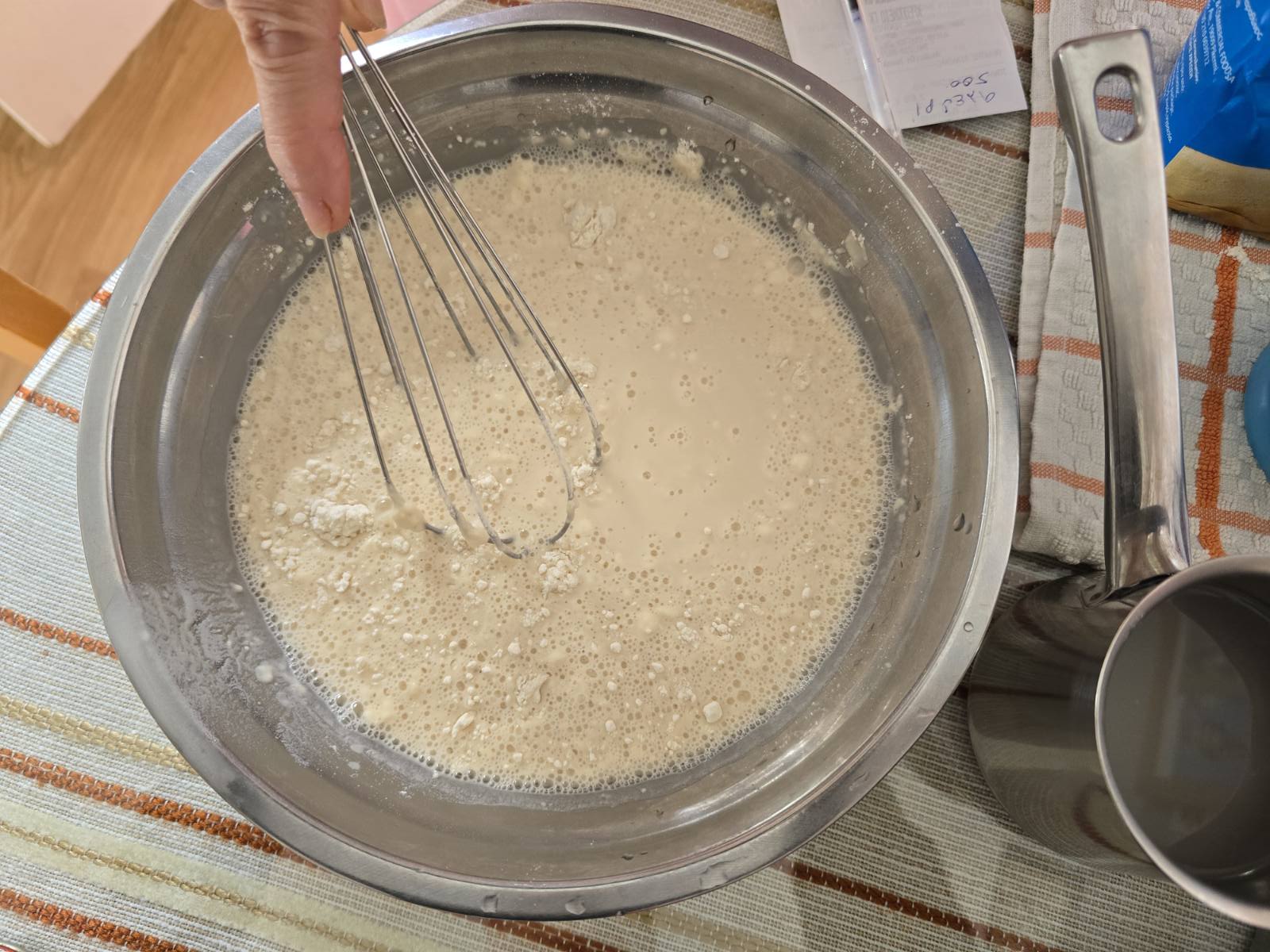
3. Rise: Cover the bowl and leave in a warm, draft-free place until the batter nearly doubles in volume. Accelerate (optional): For a quicker rise, cover with a kitchen towel and place the bowl in a very lightly preheated oven (warm to the touch, not hot) for about 20-30 minutes.
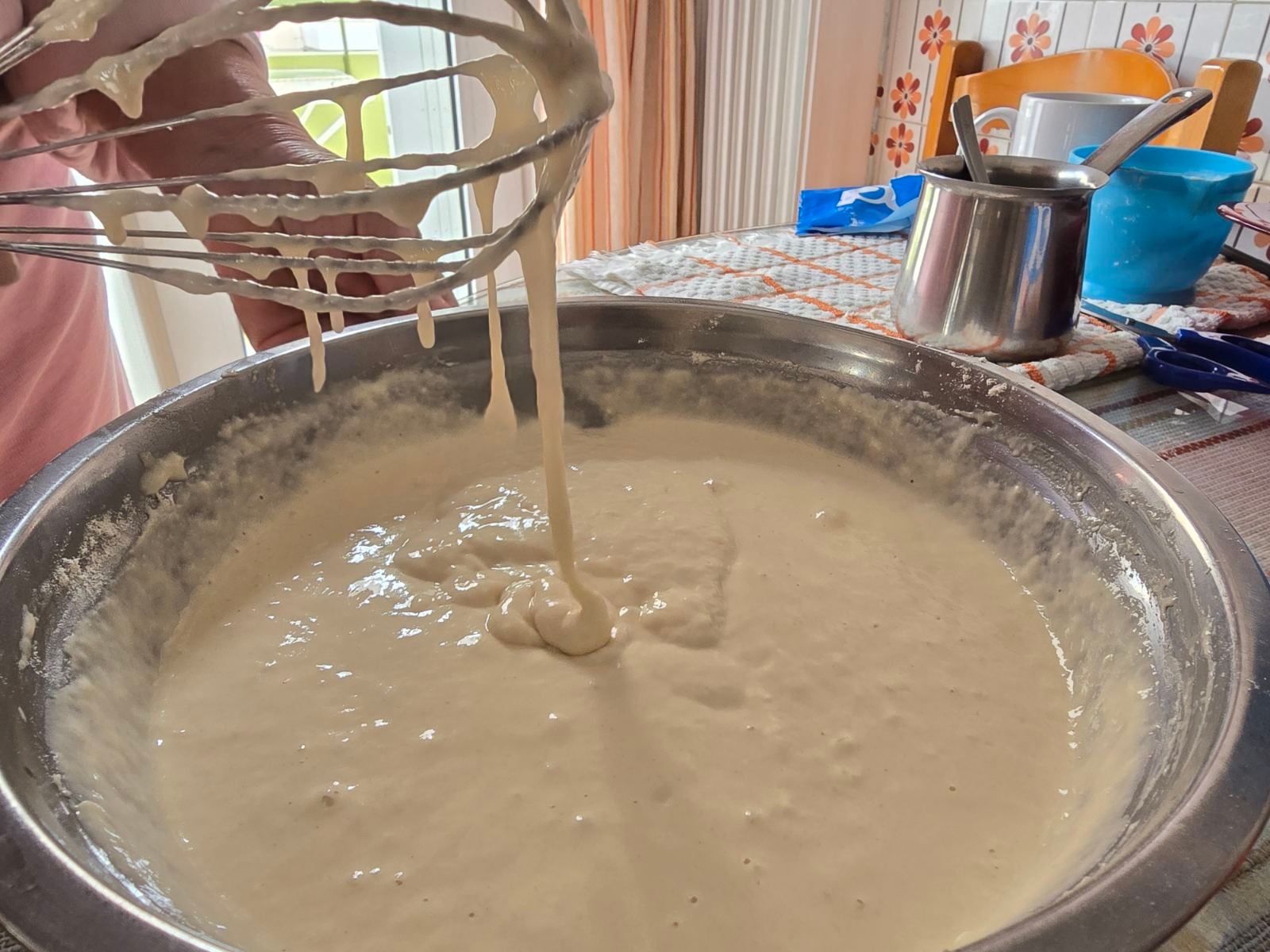
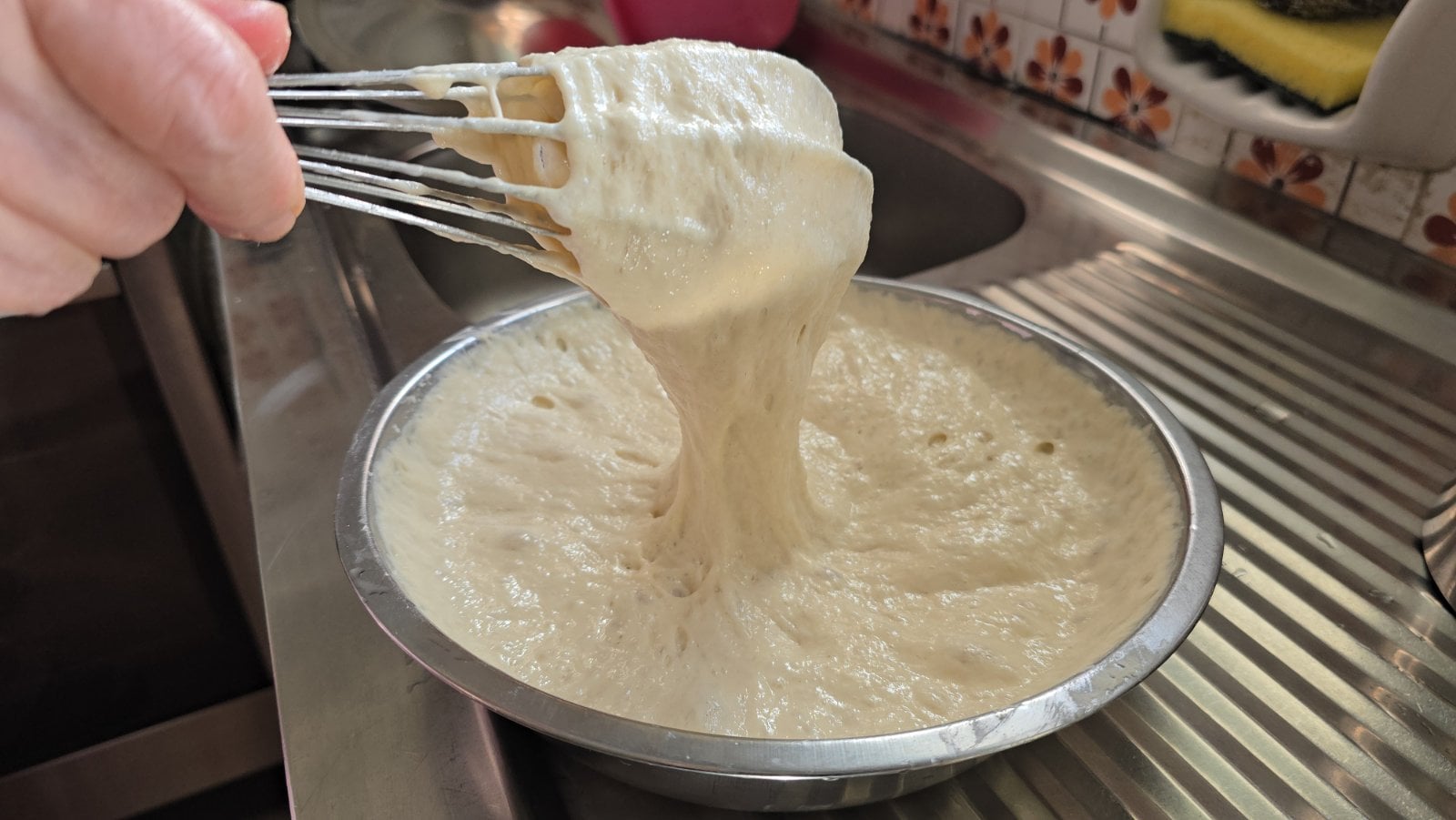
The dough texture: The dough should be thick and pourable. Neither runny nor dense. When you lift the whisk, it stretches into thin, stringy ribbons that slowly fall back into the bowl, indicating the proper elastic texture. Look at the photo and the video.
4. Heat the oil: Pour oil into a heavy-bottomed pan to allow deep frying and warm to 160°C / 320°F. Test by dropping a little batter. It should sizzle and rise. Keep a slotted spoon and a paper-towel-lined platter or tray.
5. Shape the loukoumades: Lightly oil a tablespoon in the oil so the batter won't stick. Scoop batter with the oiled spoon. Hold the spoon over the oil and use your index finger to coax the batter off the spoon. It will form a rounded ball as it drops. Re-oil the spoon as needed; do not overcrowd the pan. Add more olive oil, if needed, along the way.
Fry evenly: Stir gently with a slotted spoon to turn the loukoumades so all sides brown uniformly. Fry until deep golden (about 3-5 minutes).
5. Drain: Remove with the slotted spoon and transfer to the paper-towel-lined platter or tray to absorb excess oil.
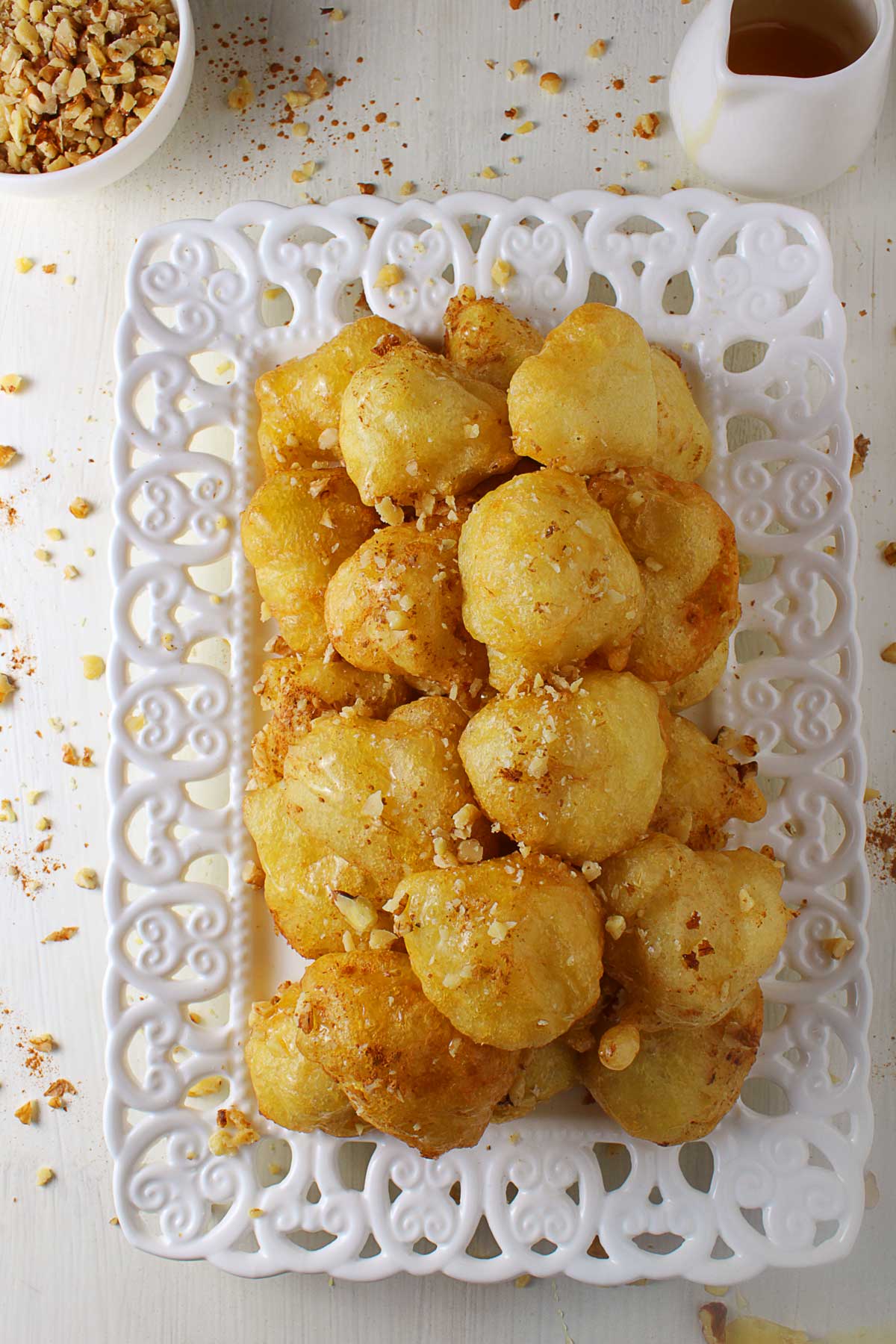
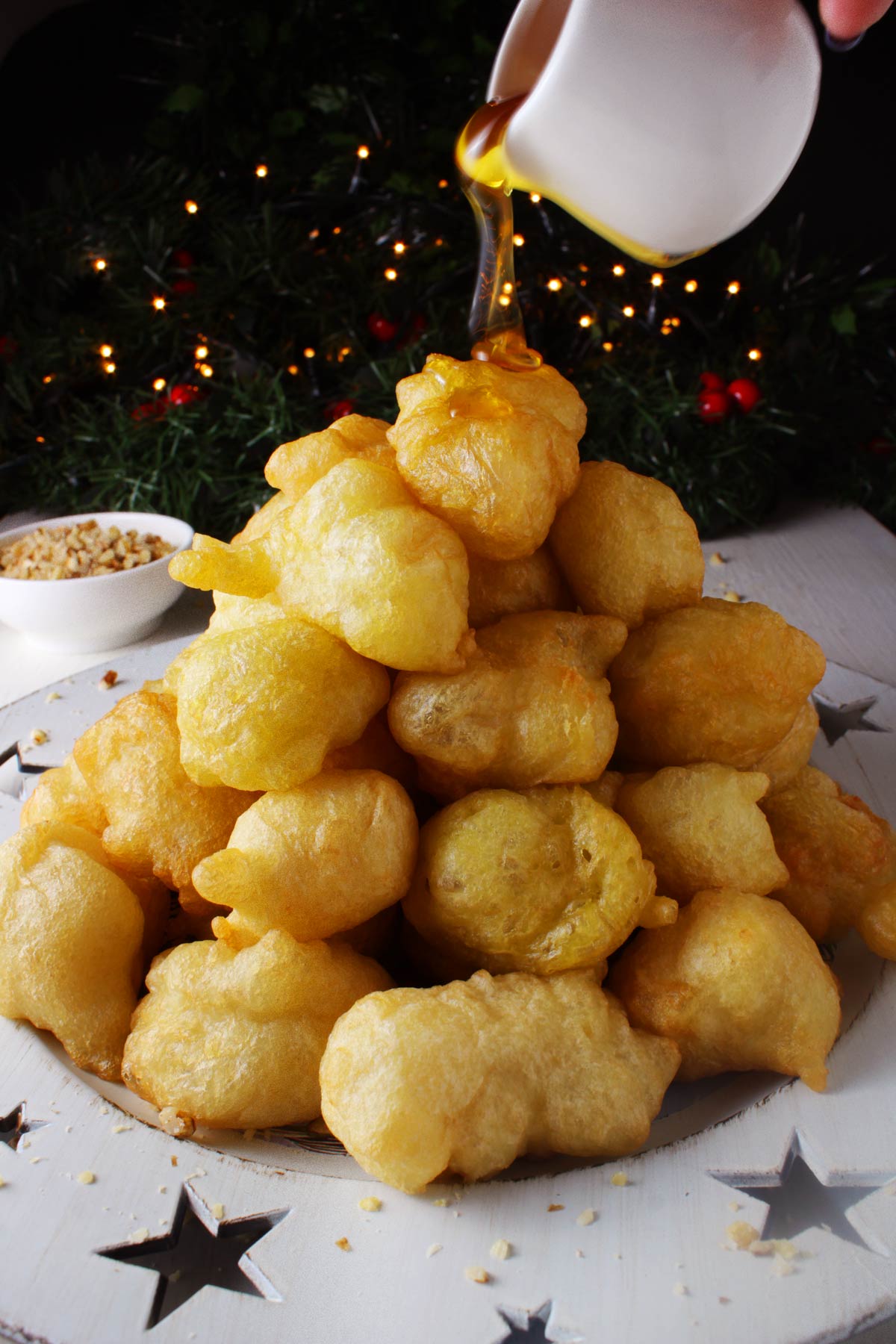
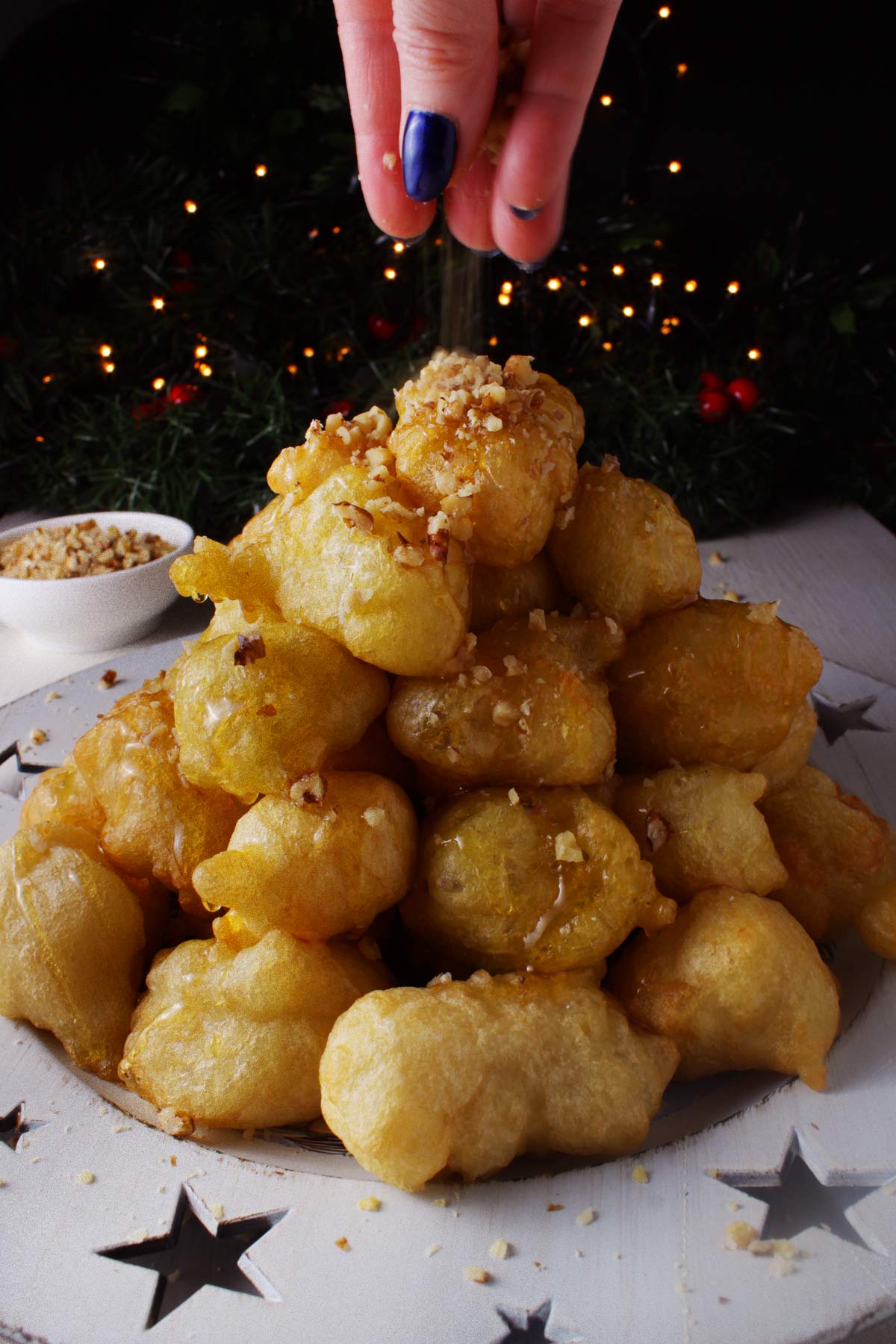
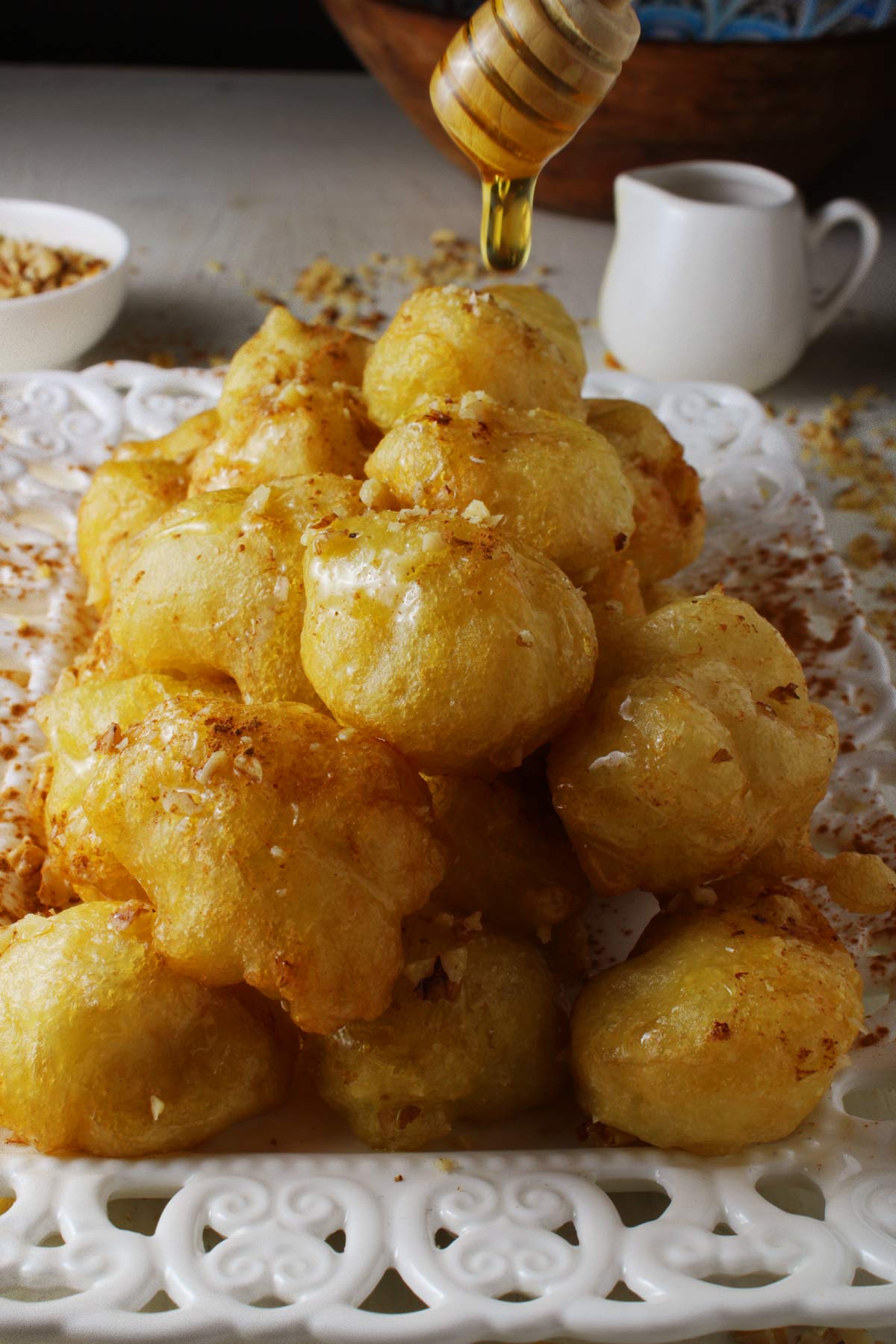
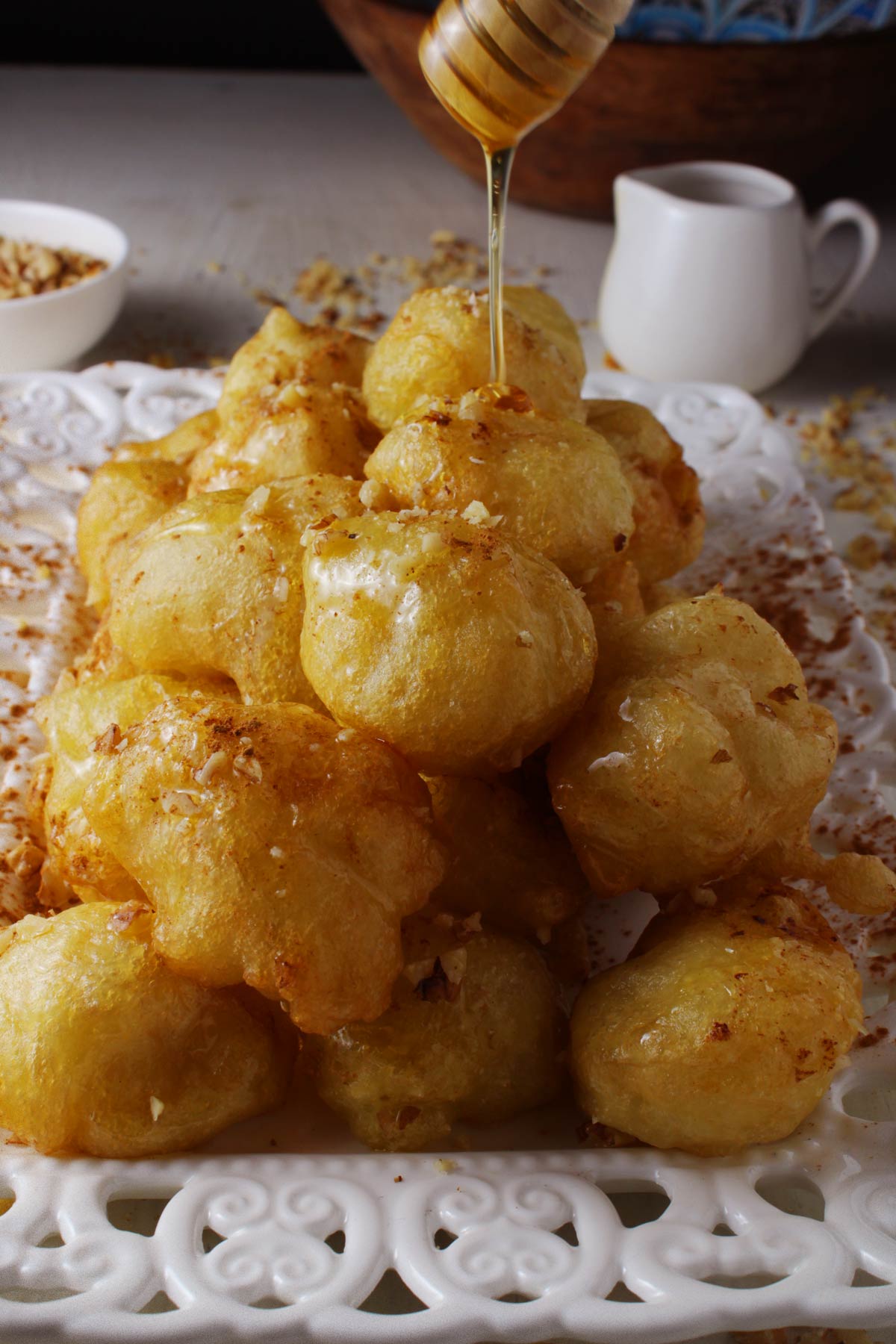
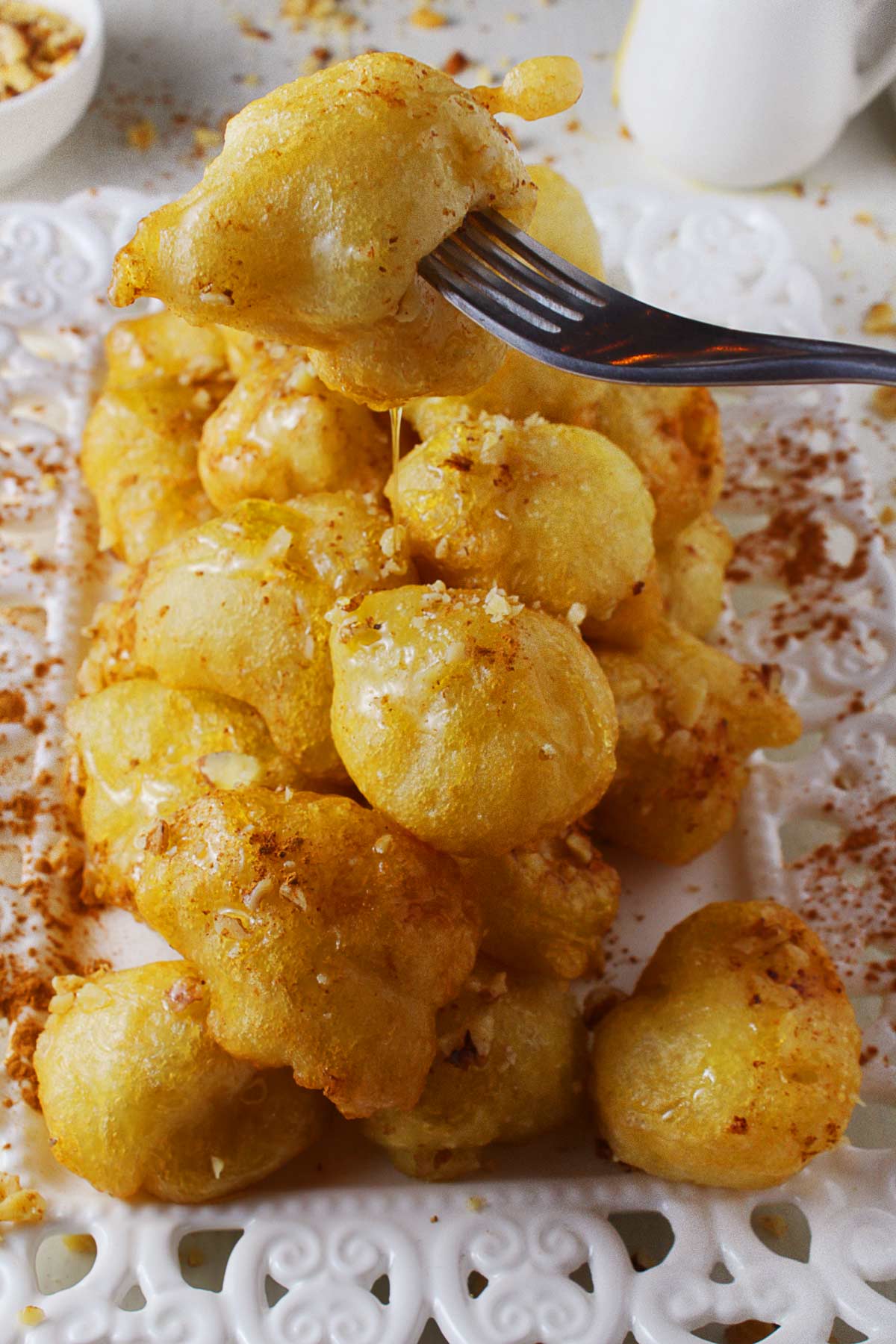
6. Serve: Arrange warm on a platter, drizzle generously with honey, and sprinkle with ground cinnamon and chopped nuts. Serve preferably hot.
Expert tips
The secret for success - The dough texture: The dough should be thick and pourable. Neither runny nor dense. When you lift the whisk, it stretches into thin, stringy ribbons that slowly fall back into the bowl, indicating the proper elastic texture.
The right oil temperature: Use hot oil but not smoking oil to get the perfect texture. Read the instructions on how to test the oil temperature even without a thermometer.
Maintain a steady oil temperature: Overheating burns the exterior before the interior cooks. Work in small batches for consistent color and texture, meaning don't overcrowd the pot.
The toppings are important: Add toppings while warm so everything sticks.
How Greeks serve Greek donuts
Everyone has their favorite way, but the classic is:
A big platter in the middle of the table, warm honey poured over generously, cinnamon sprinkled with confidence, a handful of chopped walnuts on top, and a pot of Greek coffee or mountain tea next to it.
How to serve leftovers
Leftover loukoumades are rare, but if it happens:
Reheat briefly in the oven to restore crispiness. Add fresh honey because the old drizzle will have soaked in. Avoid the microwave because they get chewy.
How to store and freeze
Storing:
Keep in an airtight glass container at room temperature for up to 24 hours. They soften over time but still taste great. Personally, I love them this way.
Freezing:
Even though I haven't done it yet, theoretically, you can freeze them after frying. Not ideal, but possible:
After frying, don't add honey or other toppings. Let them cool completely and freeze them on a baking sheet, then transfer to a bag. Reheat them in a hot oven. Add fresh honey after reheating.
FAQs
Your yeast was old, or your water was too hot.
No. They won't puff or crisp properly. They are a fried dessert.
The best option is olive oil. It is the healthier choice without compromising the taste.
Your oil wasn't hot enough, or the dough didn't rise fully, or you put more flour in the dough. Follow my instructions for the perfect dough and the right frying method.
Yes. Keep the dough in the fridge and let it warm up on the counter for a couple of hours. It should be at room temperature before frying them.
More similar recipes
If you love Greek donuts, you might also enjoy:


In my Christmas ebook, you will find more festive recipes like these Fried Dough Spirals (Diples) and traditional Baklava.
My Christmas ebook!
35 traditional Greek recipes for your Christmas festive table!
Recipe
Greek Donuts with Honey - Loukoumades
Ingredients
FOR THE DOUGH
- 1.9 cups (460 ml) just under 2 cups lukewarm water
- About 4 cups (500g) all-purpose flour, or bread flour, or strong flour
- 1 pinch of granulated sugar
- 1 tablespoon (9 g) dry yeast
- 1 pinch of salt
- 1 tablespoon ground mastic (mastiha), (optional)
- Zest from a small orange or lemon (optional)
FOR FRYING
- 1 ⅔ cups (400 ml) olive oil, (additional if needed)
FOR SERVING
- Honey*1
- Ground cinnamon
- Crushed walnuts
- Nuts of your preference, crushed almonds, pistachios, etc
- Melted chocolate*2 (not traditional but so good!)
Instructions
ACTIVATE THE YEAST
- In a big bowl, combine about ¾ of a cup of the water, add the sugar, and the yeast. Whisk gently until the yeast has fully dissolved. Allow the mixture to rest for 5-10 minutes until lightly foamy.
PREPARE THE GOUGH
- In the same bowl, add the remaining dough ingredients. Use a whisk until the batter becomes smooth and free of lumps.
- Cover the bowl securely with plastic wrap and set aside in a warm, draft-free place for about 1 hour, or until the batter has doubled in volume.
- Accelerate the procedure (optional). Cover the bowl with a clean kitchen towel and place it in an oven that has been very lightly preheated. The oven should feel just warm, not hot. Gentle warmth will help the dough rise faster (about half an hour).
- Important: The dough should be thick and pourable. Neither runny nor dense. When you lift the whisk, it stretches into thin, stringy ribbons that slowly fall back into the bowl, indicating the proper elastic texture.
HEAT THE OLIVE OIL
- Pour the olive oil into a medium, heavy-bottomed frying pan or pot to allow for deep frying. Warm the olive oil over medium heat until it reaches about 320°F (160°C).
- Alternatively, test the temperature by carefully dropping in a small amount of batter. If it sizzles steadily and rises at the surface, the oil is ready.
SHAPE THE LOUKOUMADES
- Lightly dip a tablespoon into the hot oil, shaking off any excess.
- Scoop up a portion of the risen batter. Hold the spoon over the hot oil and, with the gentle push of your index finger, guide the batter off the spoon and into the oil. The dough will naturally gather into a rounded shape as it falls, forming evenly sized loukoumades.
- Continue shaping the batter in this manner, working steadily but without overcrowding the pan. Re-oil the spoon lightly as needed to prevent sticking. Add more olive oil to the pot, if needed, along the way.
FRY UNTIL GOLDEN
- Fry the loukoumades, gently stirring and turning them with the spoon so they brown evenly on all sides. Fry for 3 to 5 minutes until golden brown. Use a slotted spoon and transfer to a paper-towel-lined platter or tray.
- Continue with the remaining batter.
SERVE
- Arrange the warm loukoumades on a serving platter. Drizzle generously with honey*1 and finish with a sprinkle of ground cinnamon and chopped walnuts or the nuts you prefer.
Notes
- In Greece, loukoumades are traditionally served with pure, fresh honey. If you do not have enough honey on hand (or if using a larger quantity is not practical) you may gently warm it to make it more fluid. Warm the honey very lightly, just until it loosens in texture. It should feel comfortably warm to the touch. You should be able to dip a fingertip into it without any discomfort. Avoid overheating the honey, as excessive heat diminishes its natural beneficial properties.
- Optional Chocolate Topping Not traditional, but hey, it's chocolate. Who could resist, right? How to Melt Chocolate (Easy & foolproof method) Ingredients: Chocolate in small pieces Method: Place the chocolate in a heatproof bowl. Set the bowl over a saucepan of gently simmering water, making sure the bottom of the bowl does not touch the water. Let the chocolate melt slowly, stirring occasionally, until smooth and glossy. Remove from heat. Pour the warm chocolate sauce over the loukoumades, garnish with coarsely chopped walnuts or almonds, and serve immediately. Tip: Never melt chocolate over direct heat-it's the quickest way to burn it.

Leave a Reply