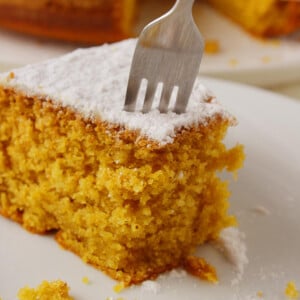
Greek Vegan Cake - Fanouropita
A moist, aromatic Greek vegan cake, called fanouropita, is made with olive oil, orange juice and zest, sweet wine, cinnamon, and cloves. This cake is traditionally made in honor of Saint Fanourios, who is believed to help reveal something you are seeking or help you find something you have lost.
Ingredients
- 1 ¼ cups (280 ml) mild olive oil
- 1 ½ cups (290 g) superfine/caster sugar
- ½ cup (120 ml) sweet wine or dessert-style wine
- 1 ⅓ cups (330 ml) fresh orange juice and zest from 2 oranges
- 1 teaspoon baking soda
- Spice mixture: 1 teaspoon ground cinnamon and ⅓ teaspoon ground cloves
- 4 cups (about 500 g) self-rising flour, sifted
Optional Ingredients
- ¾ cup (140 g) raisins
- 1 cup (120 g) finely chopped walnuts
- ⅓ cup (60 g) sesame seeds
- ⅓ teaspoon ground nutmeg
Garnish
- Powdered sugar
- Chopped walnuts
- Sesame seeds
Instructions
Prepare the oven and the baking pan
- Preheat the oven to 340°F / 170°C with conventional top-and-bottom heat, or 320°F / 160°C fan-assisted
- Use a springform pan or a regular cake pan. Use an 11 × 7-inch or 12 × 8-inch (about 30 × 24 cm) rectangular baking pan or a 10- to 12-inch (about 26 to 30 cm) round baking pan.
- Line the bottom of the pan with parchment paper, trimming it to fit its shape. Lightly grease the sides with a pastry brush (or your fingers), then dust them with flour, turning the pan to coat the sides evenly. Finally, turn the pan upside down and gently tap out any excess flour.
- If using sesame seeds, grease the entire pan, coat it with flour, and sprinkle sesame seeds all over it, including the sides.
Make the cake batter
- Add the olive oil, sugar, orange zest, and spices to a large bowl. Whisk vigorously until the sugar has dissolved as much as possible and the mixture looks creamy.
- Add the sweet wine and whisk until incorporated.
- In a separate big jug, combine the orange juice and baking soda. Keep the jug right over the bowl with the ingredients. As you stir the soda into the orange juice, the mixture foams up, and there is a risk of overflow. Add it carefully to the bowl once the foaming begins to settle. Whisk just enough to incorporate it into the oil-and-sugar mixture.
- Don't forget to sift the flour before adding it to the mixture. For self- rising flour, place a sifter over the bowl and sift the indicated amount of flour. If you turn all-purpose flour into self-rising, mix the flour with 5 teaspoons of baking powder and a pinch of salt.
- Add the self-rising flour gradually, mixing gently only until incorporated. The batter should be loose and pourable, not stiff.
- If using raisins and walnuts, lightly wet them with water or orange juice and coat them with a little flour. Gently fold them into the batter. Don't overmix.
- Pour the batter into the prepared pan and spread it gently into an even layer. Gently tap the pan on the countertop 2-3 times to settle the batter evenly. If using sesame seeds, sprinkle them over the surface as desired.
Bake
- Bake on the lower rack at 340°F / 170°C for about 1 hour 10 minutes, or at 320°F / 160°C fan-assisted for about 1 hour.
- The cake should have risen significantly and developed a nicely browned surface. Don't rely on the clock alone. Check the center. Insert a thin knife or skewer into the center. It should come out clean. Remove immediately from the oven.
- Allow the cake to cool in the pan for about 15 minutes. If you use a springform pan, release its sides. Place a serving plate over the cake and carefully invert it onto the plate. Gently peel off the parchment paper (if using) while the cake is still warm. Set it aside to cool.
Garnish
- #1. Traditionally, a decorative Greek lace doily is placed over the cake and used as a stencil to create a delicate pattern with powdered sugar. Alternatively, dust the surface with powdered sugar (like in the photos).#2. Decorate the top with chopped walnuts arranged in the shape of a cross. #3. Sprinkle chopped walnuts or nuts and dried fruits over the powdered sugar surface.
- For the best presentation, dust the cake with powdered sugar just before serving, either whole or after cutting it into individual pieces.
Notes
- You can use vegetable oils like sunflower oil, but it is not recommended because they are too processed.
- If your sugar is coarse, you can pulse it briefly in a blender or food processor until finer.
- You can use whatever wine you have and dissolve a teaspoon of honey in it (obviously not an option for vegans). You can also use cognac like Metaxa or orange-flavored liqueur like Cointreau, but expect a slightly different flavor.
- If you use all-purpose flour, adjust the leavening accordingly. Add 5 teaspoons of baking powder crazy and a generous pinch of salt. Since this recipe was developed around self-rising flour, I recommend keeping it if you want the intended result.
- Store in an airtight container (or wrap it well) at room temperature. It should keep well for several days (If it is hot -like in Greece- the following day I place it in the fridge to keep it fresh for even more days).
- Freeze: Cool the cake completely, wrap it well, and freeze it in individual pieces or as a whole cake. Thaw it completely at room temperature before serving.
Nutrition
Serving: 1pieceCalories: 465kcalCarbohydrates: 59gProtein: 4.5gFat: 23.8gSaturated Fat: 3.4gPolyunsaturated Fat: 2.7gMonounsaturated Fat: 17.1gSodium: 635mgPotassium: 70mgFiber: 1gSugar: 27gVitamin A: 50IUVitamin C: 14mgCalcium: 55mgIron: 1.5mg
Tried this recipe?Please consider Leaving a Review!