
This Greek semolina cake is one of those desserts where the texture tells you immediately if you got it right. The cake should be light but slightly grainy from the semolina, and when the syrup hits, it absorbs just enough to become moist without turning heavy. The tricky part isn't the ingredients. It's the timing. Pour the syrup at the wrong time, and you end up with either a dry cake or a soggy one. This version focuses on getting that balance right.

Jump to:

What is Greek revani
Revani (or ravani, depending on the region and your grandmother's opinion) is the semolina cake that shows up at every Greek celebration dressed to impress, soaked in syrup. This old-school classic has been passed down through generations and still holds its place at every family table, feast, or spontaneous coffee gathering.
This is the kind of dessert that skips the drama of fancy frostings and jumps straight to comfort. Golden, nostalgic, and unapologetically sweet, revani is a timeless slice of Greek tradition served straight from the heart of home baking.
If you love syrupy desserts like galaktoboureko with custard cream, portokalopita with shredded phyllo, or full of walnuts karidopita, Greek cuisine has plenty more to offer. There's a syrup-drenched bite for every mood. Revani is their more casual cousin-no phyllo, no fuss, just flavor.
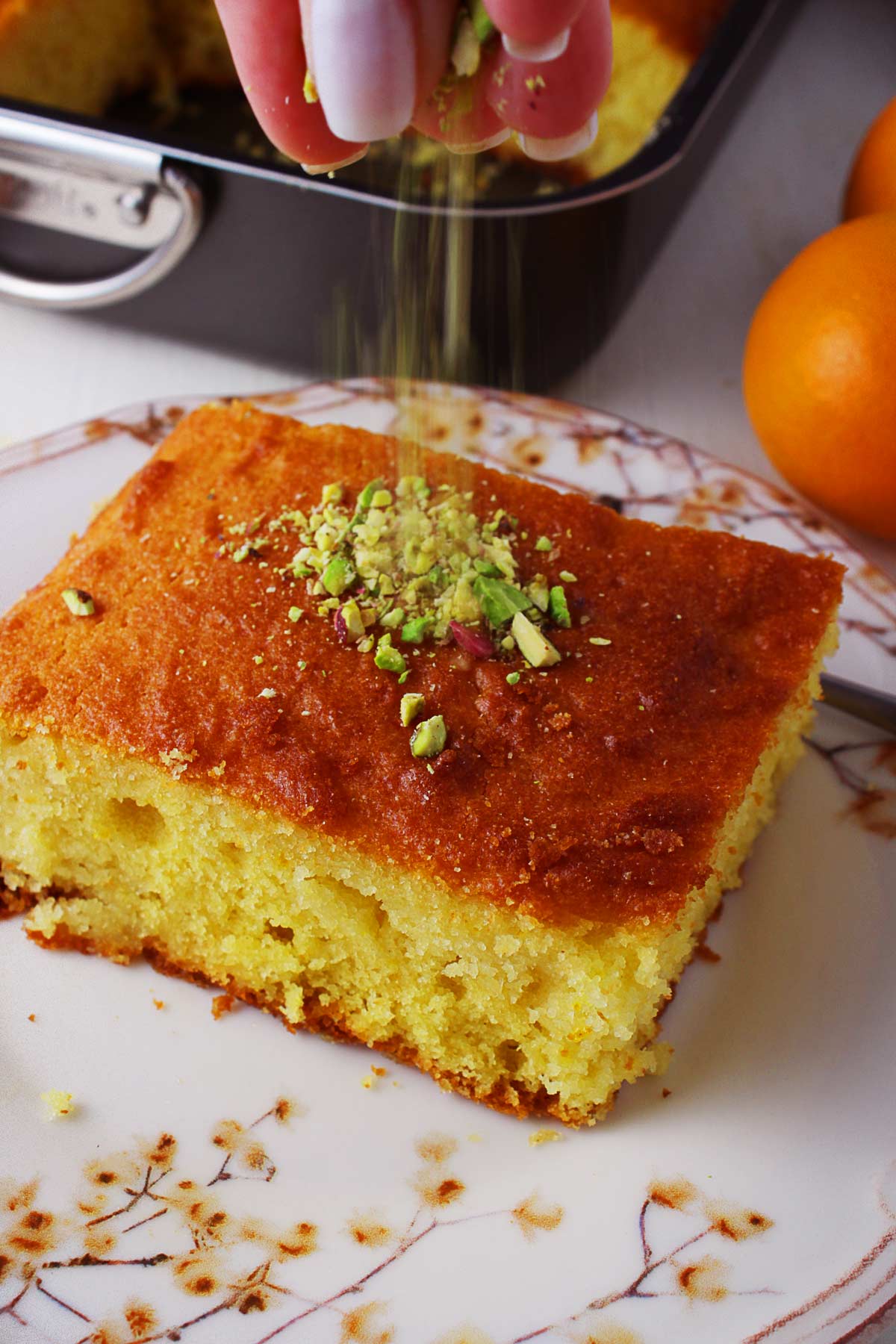
The recipe's history
Not interested in food history? No problem Jump to Recipe
Revani roots stretch back to the Ottoman Empire, and its name may reference the 16th-century poet Revani Effendi. Its spread through the Balkans led to many regional variations.
While Revani's roots may stretch across borders and centuries, its story in Greece begins in the 19th century, during the era of Ottoman rule. In 1886, a small dairy-confectionery in Veria (a picturesque city in northern Greece) gained official permission from the Ottoman authorities to produce a then-unknown syrupy semolina dessert. That cake was revani.
With time, the shop's version of revani gained legendary status. Its popularity spread far beyond the city's borders, making revani not just a dessert but a symbol of Veria itself. Even today, over 130 years later, the original recipe remains a fiercely guarded family secret, and travelers from all over Greece still go to Veria to taste the authentic, melt-in-your-mouth revani.

Is revani Greek or Turkish?
Now, here's where it gets a little sticky, just like the syrup. Revani exists across the Eastern Mediterranean, and you'll find variations in Turkey, Syria, and beyond.
But the Greek revani-especially the Northern Greek version from Veria-has claimed its own identity. It's usually made with semolina, sugar, eggs, and yogurt, then doused in syrup flavored with lemon, orange, or mastiha. The Greek version tends to be slightly lighter and citrusy, while the Turkish one leans toward floral and very sweet.
So, is revani Greek? Yes. Is it Turkish too? Also yes. Let's say that they're siblings, not twins. Like many dishes in the Balkans and Asia Minor, revani belongs to a shared culinary heritage. Well, more versions of a beloved dessert! I want to taste them all and not fight over revani's authenticity.
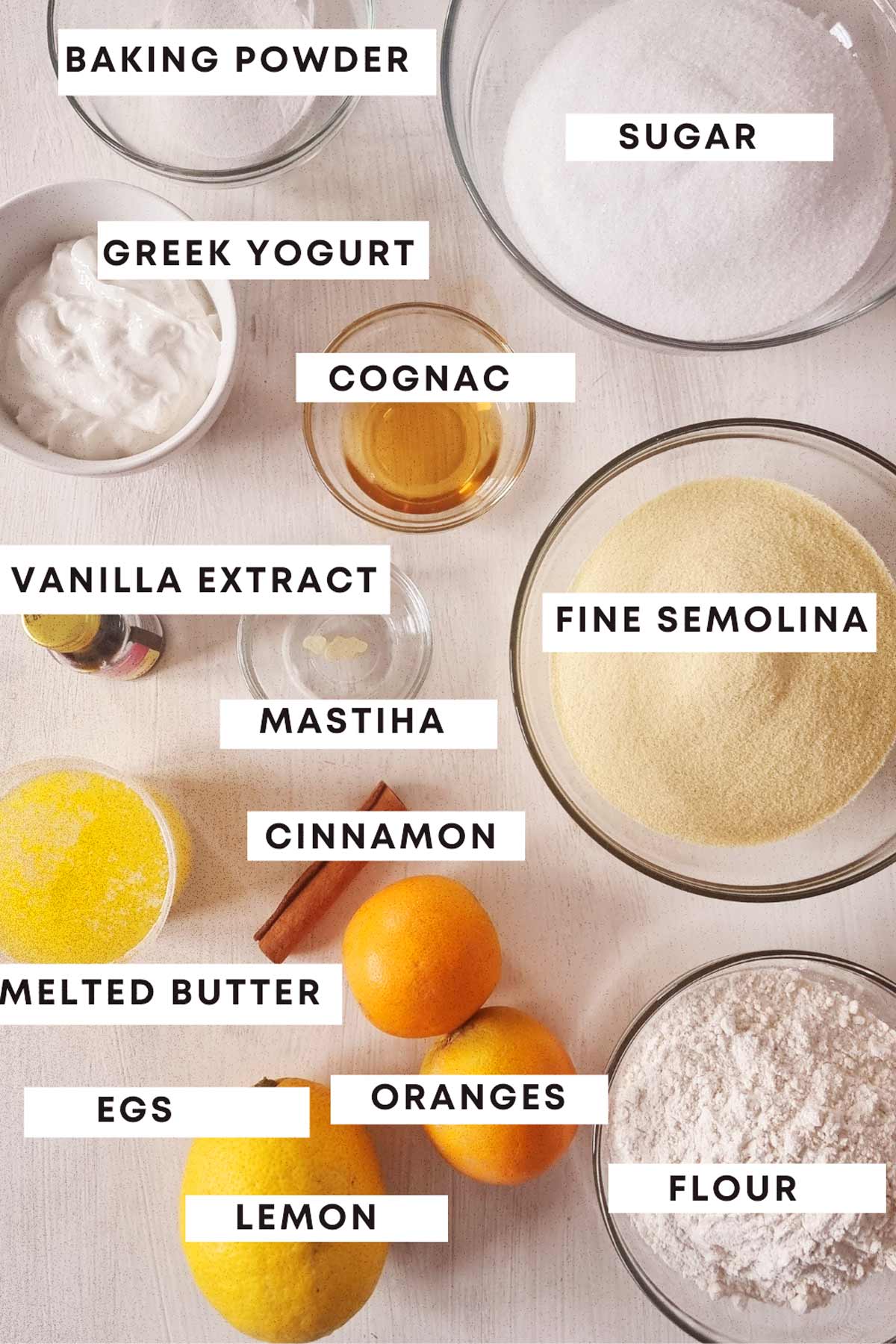
Key ingredients
For making revani, you need basic dessert ingredients.
Semolina: The key ingredient here is semolina, which gives the cake its signature texture. Fine semolina creates a softer crumb, while coarse semolina gives a more pronounced grain.
The syrup: It is just as important-typically sugar, water, and citrus (often lemon or orange). The citrus isn't just for flavor. It cuts the sweetness and keeps the cake from feeling heavy.
Mastiha: The hardest ingredient to find is mastiha, a natural, aromatic resin cultivated exclusively on the Greek island of Chios. Of course, I give you an alternative (vanilla extract), but I highly recommend using mastiha. You can order it online or ask a local Mediterranean/Asian/Middle Eastern deli.
Greek yogurt: Use Greek yogurt for this recipe. We love it because it adds moisture and a slight tang. Don't substitute Greek yogurt with another kind of yogurt. Look carefully at the ingredients. Authentic Greek yogurt typically includes pasteurized milk/cream (cow, sheep, or goat) and active cultures like Lactobacillus bulgaricus.
How to make Greek semolina cake
Let's make this amazing dessert:
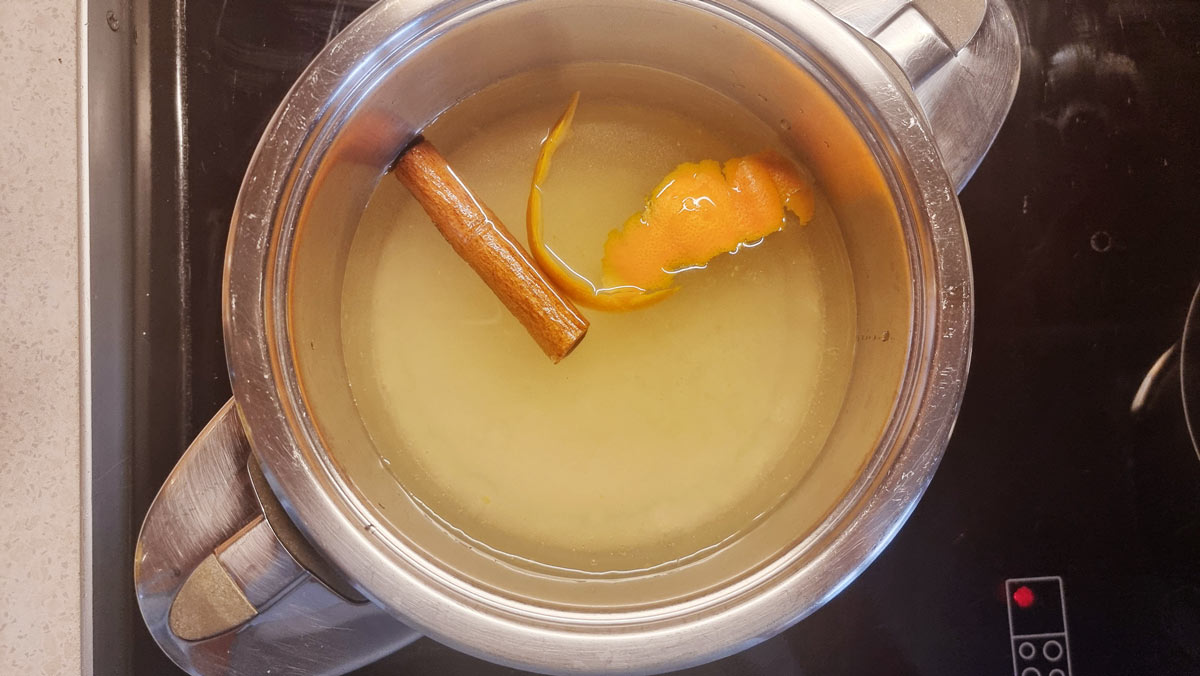
Step 1: Start with the syrup so it has time to cool.
Simmer sugar, water, and citrus peel until slightly thickened, then let it cool completely. The temperature contrast between syrup and cake is what controls absorption (this is where most people go wrong).
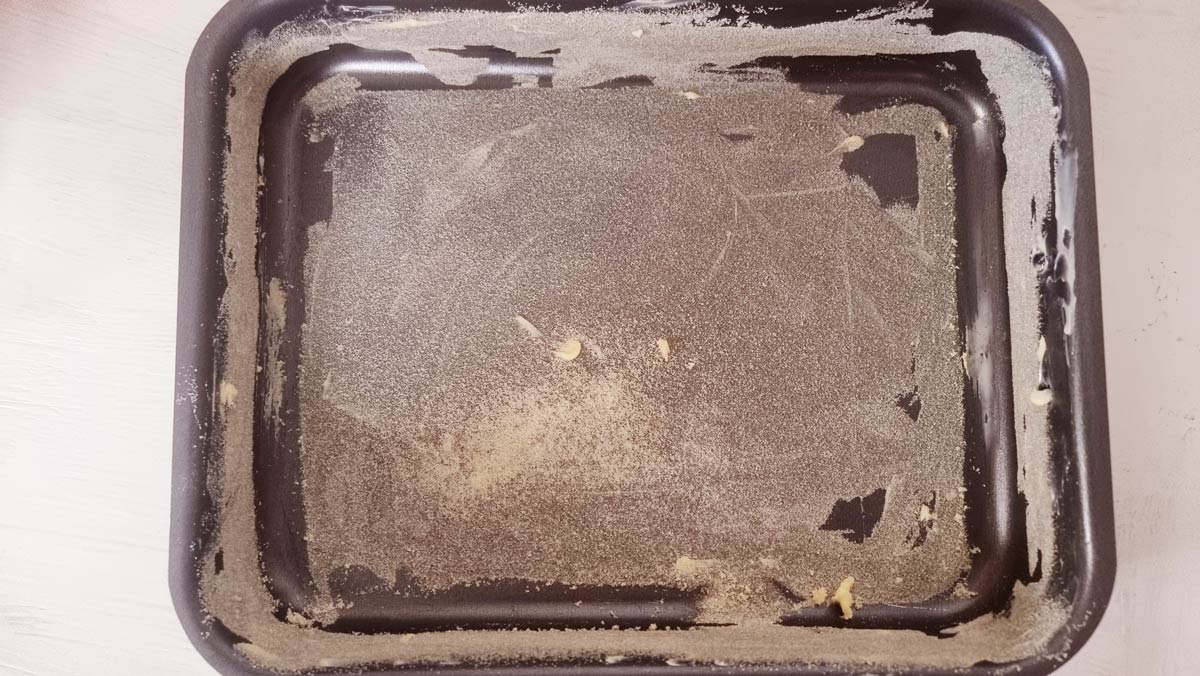
Step 2: Preheat the oven, grease a baking pan with butter and semolina.
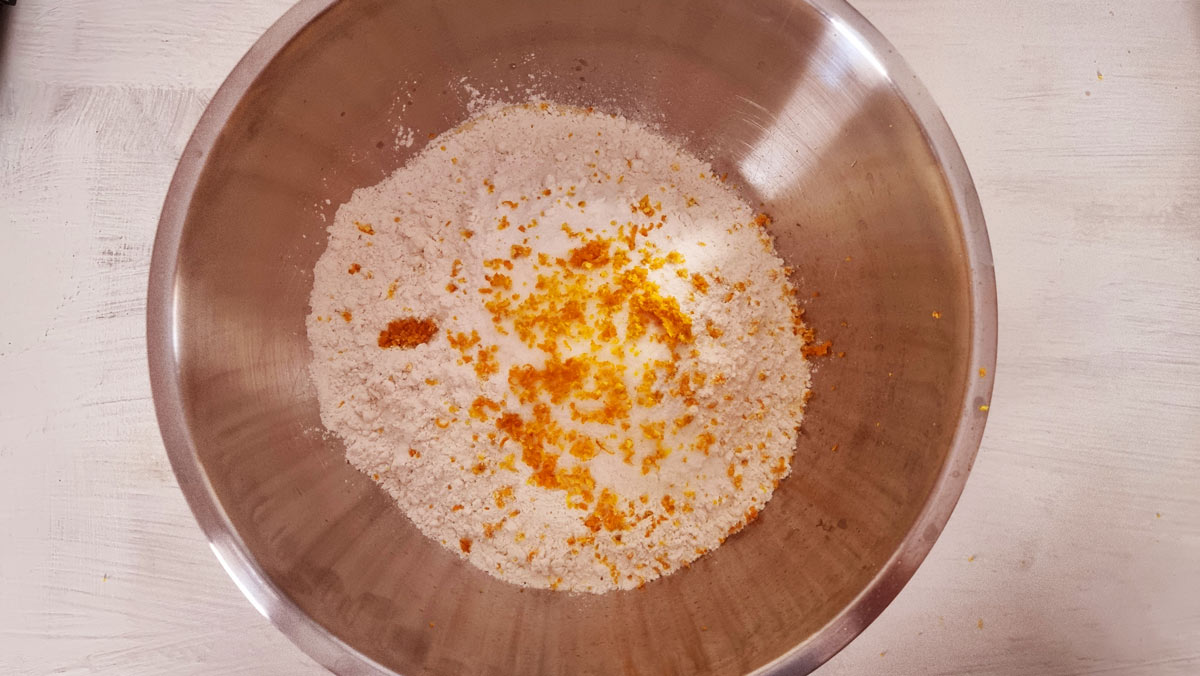
Step 3: Mix dry ingredients (semolina, flour, baking powder, etc.). This ensures even distribution and avoids clumping.
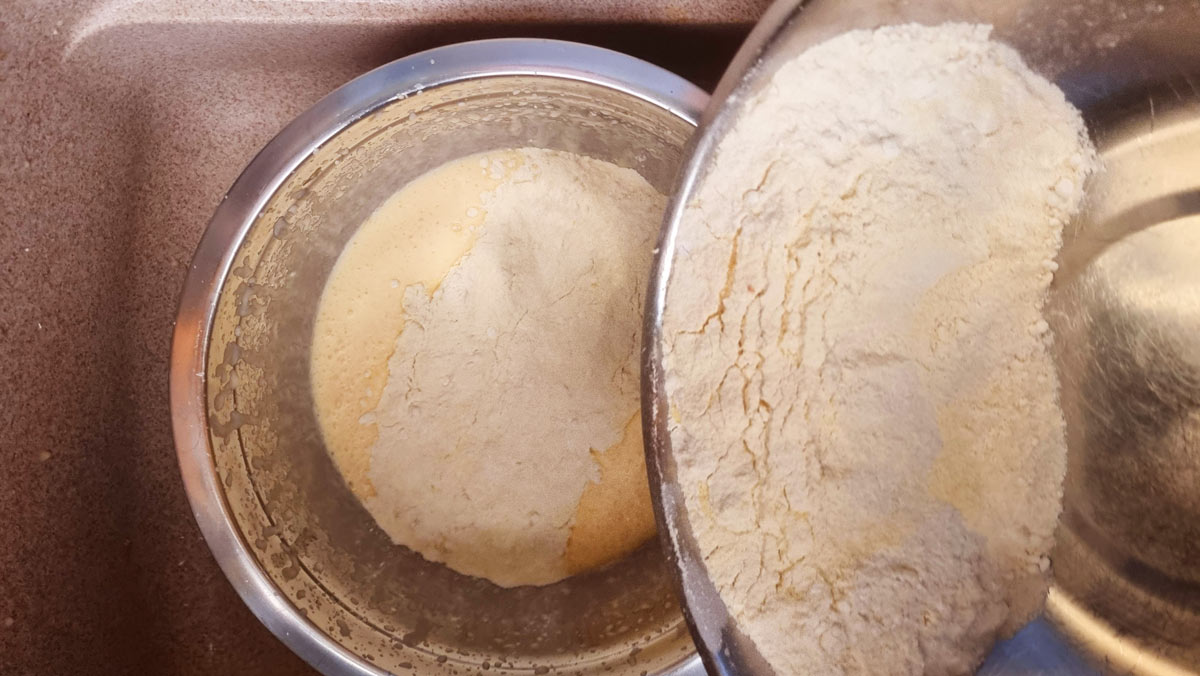
Step 4: Beat eggs and sugar, then add yogurt, juice, butter, and cognac (optional).
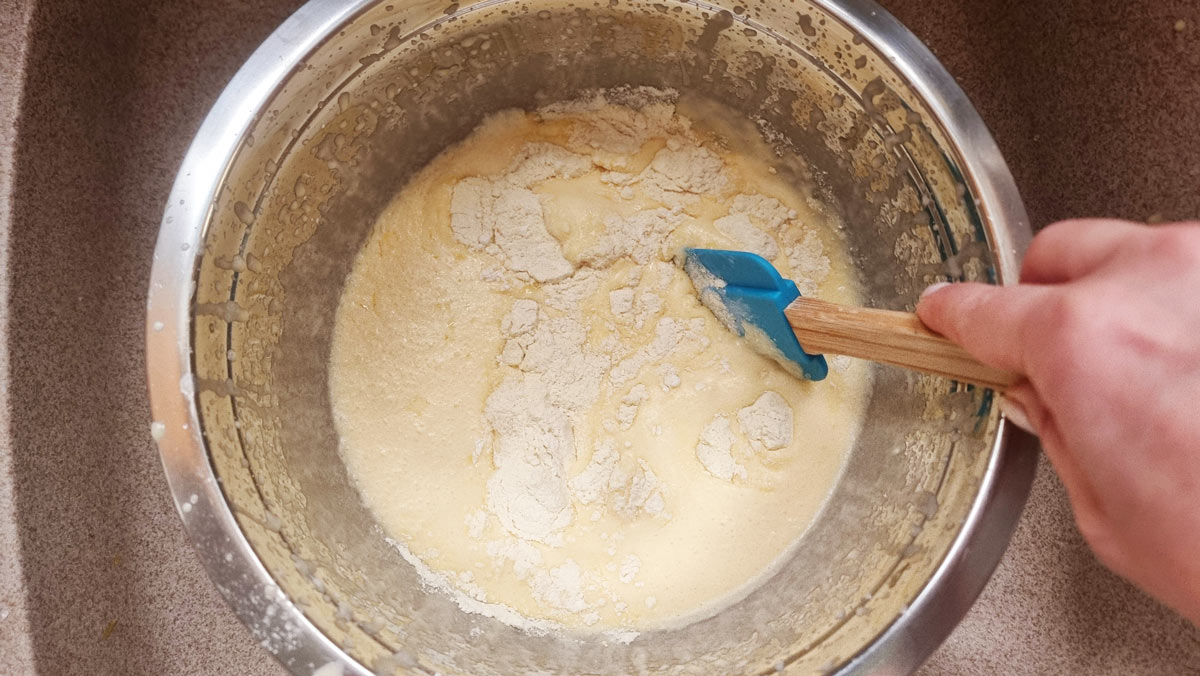
Step 5: Combine dry and wet ingredients into a smooth batter. Fold gently to preserve texture.
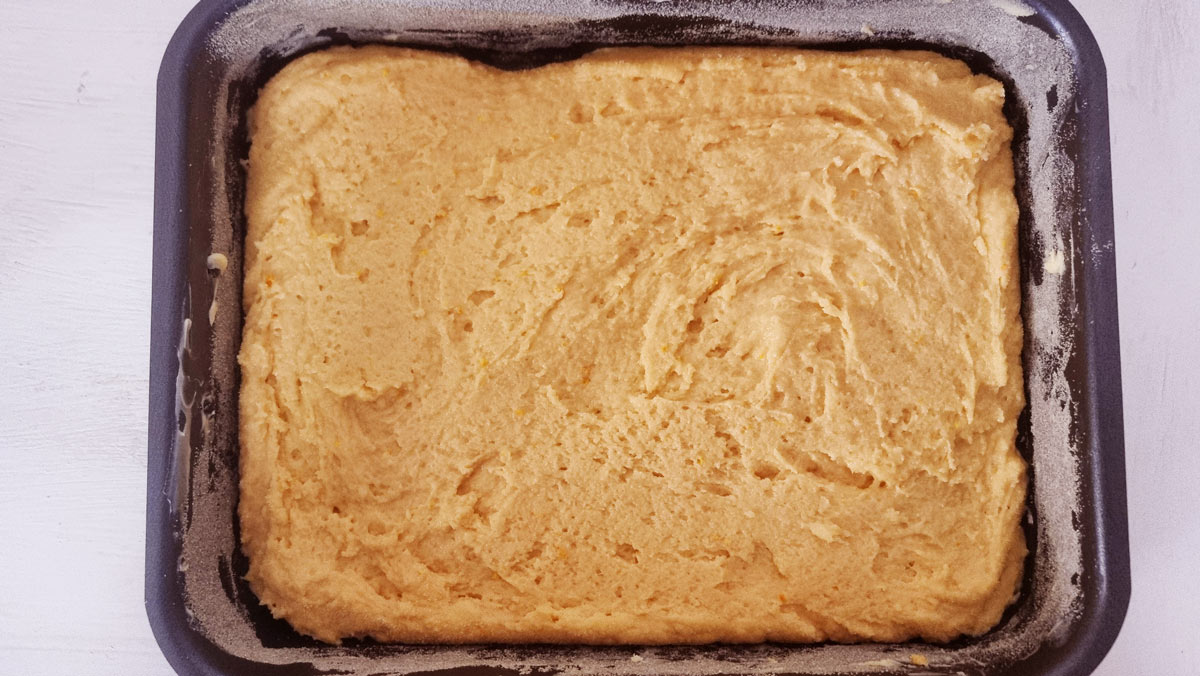
Step 6: Pour into a prepared baking pan and bake until golden. You're not just looking for color. You want the cake to feel firm so it can absorb syrup evenly without collapsing.
Step 7:
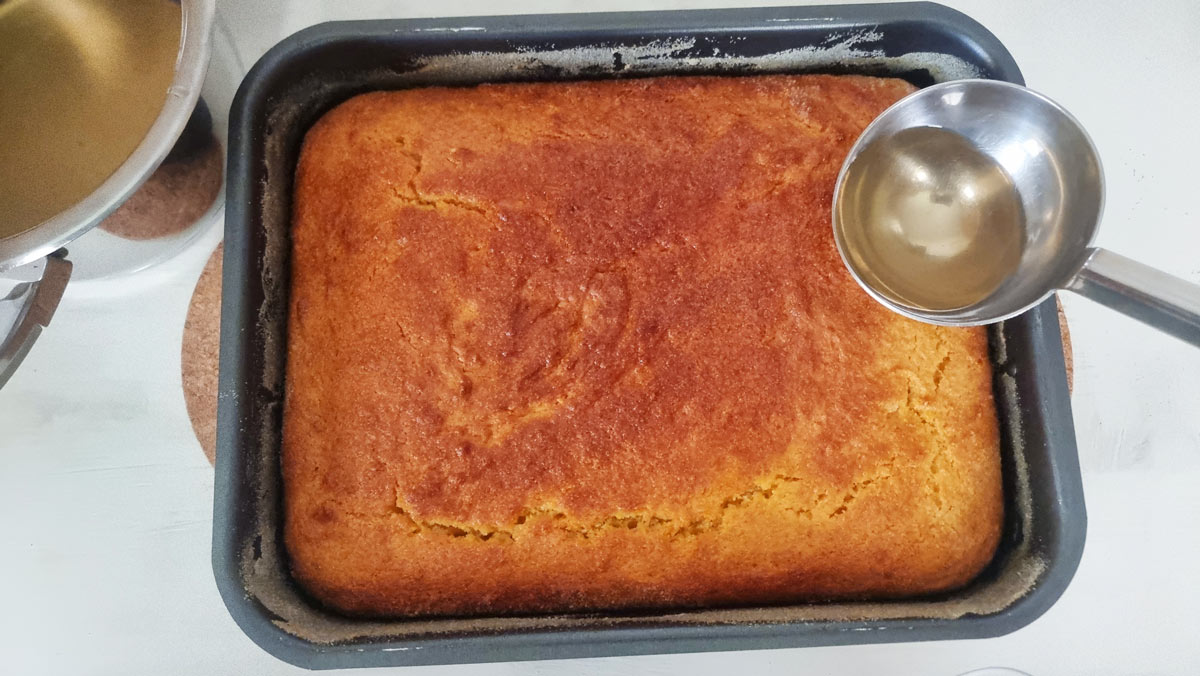
This is the step that determines the final result.
Pour cool syrup over a hot cake. The cake absorbs the liquid gradually, staying light while becoming evenly moist. If both are hot, the cake can turn soggy. If both are cold, the syrup won't absorb properly.
Let the cake rest after pouring. This is when the texture settles and improves.

Step 8: Let it rest for at least 1 hour (preferably overnight) before slicing. This deepens the flavor.
Serve with chopped almonds, shredded coconut, pistachios, and/or ice cream. My serving proposal is pistachios and ice-cream.
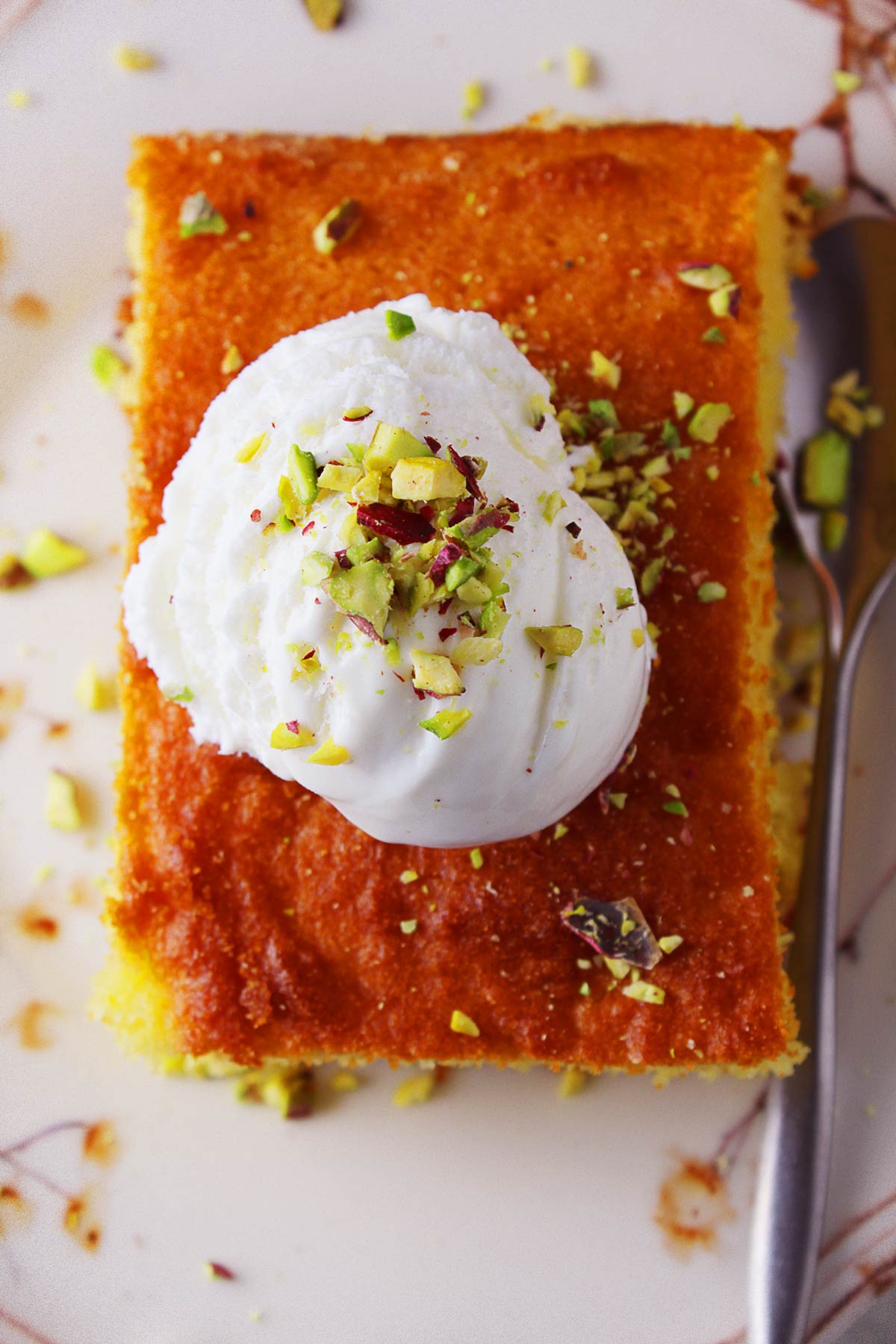
💡 If the texture isn't quite right, don't change the ingredients. Adjust the syrup step. Getting the temperature contrast right (hot cake, cool syrup) makes the biggest difference.
How Greeks serve revani
Traditionally, revani is presented in classic diamond or square slices, often garnished with whole almonds, shredded coconut, or pistachios.
In Greece, this dessert is often served at special gatherings, from name days to relaxed Sunday family lunches. It is particularly appreciated during Christmas and Easter, when the table is filled with rich meat dishes. The syrupy sweetness offers a refreshing contrast that balances the heaviness of the meal.
Served with a scoop of ice cream, it becomes truly irresistible, especially after the Easter feast, when the weather turns warmer and a cool, light dessert is exactly what everyone craves.
Nevertheless, you can enjoy it with coffee or herbal tea any time of the day.

Storage
Room temperature: Cover the baking pan with plastic wrap or transfer to an airtight food container. It keeps beautifully for up to 3 days in the winter and 2 days in the summer.
To refrigerate: Store in the refrigerator for up to a week.
To freeze: Individually wrap slices and freeze for up to 3 months. Thaw in the fridge overnight, then warm gently in the oven, if you like.
To reheat: Warm at 160 °C (320 °F) for 5-7 minutes or microwave 10-15 seconds per slice.
More syrupy Greek desserts
If you love this semolina cake, don't miss these homemade desserts that embody Greek warmth and tradition:


Recipe

Greek Semolina Cake - Revani
Ingredients
FOR THE SYRUP* (see note #1)
- 2½ cups (620ml) water
- 2 cups (400g) granulated sugar
- A strip of orange or lemon peel
- 1 cinnamon stick
FOR THE SEMOLINA CAKE - Dry Ingredients
- 1⅓ cups (250g) fine semolina
- 1 cup (120g) all-purpose flour
- 5 teaspoons baking powder
- A pinch of salt
- 2 oranges, the zest or the zest of 1 orange + 1 lemon
- ½ teaspoon ground mastiha (optional but highly recommended)*(see note #2)
- 1 tablespoon semolina for greasing the baking pan
FOR THE SEMOLINA CAKE - Wet Ingredients
- 3 large eggs
- ¾ cup (150g) granulated sugar
- ¾ cup (180g) Greek strained yogurt (5-10% fat)
- ⅔ cup (150g) melted butter
- ⅔ cup (160 ml) orange juice
- 1 tablespoon vanilla extract
- ¼ cup (50ml) cognac (optional)
- 1 tablespoon melted butter for greasing the baking pan
FOR GARNISHING
- Crushed pistachios
- Ice cream (vanilla preferably)
- Shredded coconut
- Crushed almonds
Instructions
PREPARATION
- Preheat your oven to 170°C (350°F).
- Generously butter a 9x13-inch (23x33cm) rectangular baking dish or pan. Dust with fine semolina.
MAKE THE SYRUP
- In a small saucepan, combine the sugar with the water. Add the cinnamon stick and the orange peel. Bring to a boil, then lower the heat and simmer for 5-7 minutes until slightly thickened. Remove from the heat and let it cool completely.
MIX THE DRY INGREDIENTS
- In a large bowl, whisk together the semolina, flour, baking powder, salt, citrus zest, and ground mastiha (if using).
BEAT THE WET INGREDIENTS
- In a separate bowl, beat the eggs and sugar until pale and fluffy (about 3-4 minutes) using a hand mixer or stand mixer. Add the yogurt, orange juice, melted butter, vanilla extract, and cognac (optional), mixing until smooth.
COMBINE THE MIXTURES
- Gradually add the dry mixture to the wet, folding gently with a spatula or whisk. Do not overmix.
BAKE
- Pour the batter into the prepared pan and smooth the top. Bake for 30 minutes, or until golden and a toothpick inserted in the center comes out clean.
SYRUP THE CAKE
- Once the revani is out of the oven and still hot, slowly ladle the cooled syrup over the surface. Let it absorb fully before adding more. This step may take 5 minutes.
GARNISH & SERVE
- Let the cake cool completely at room temperature. Cut into diamond or square pieces, and optionally garnish with shredded coconut, crushed pistachios, or a dollop of cream or ice cream.
Notes
- While I believe the syrup quantity in this recipe is perfectly balanced, if you prefer your revani extra syrupy, feel free to add one more cup each of sugar and water to the syrup. Just be sure to let it soak in slowly so the cake can absorb it evenly.
- If you cannot find ground mastiha and have purchased mastiha drops, grind the mastiha in a mortar with a teaspoon of sugar until powder.



Leave a Reply