
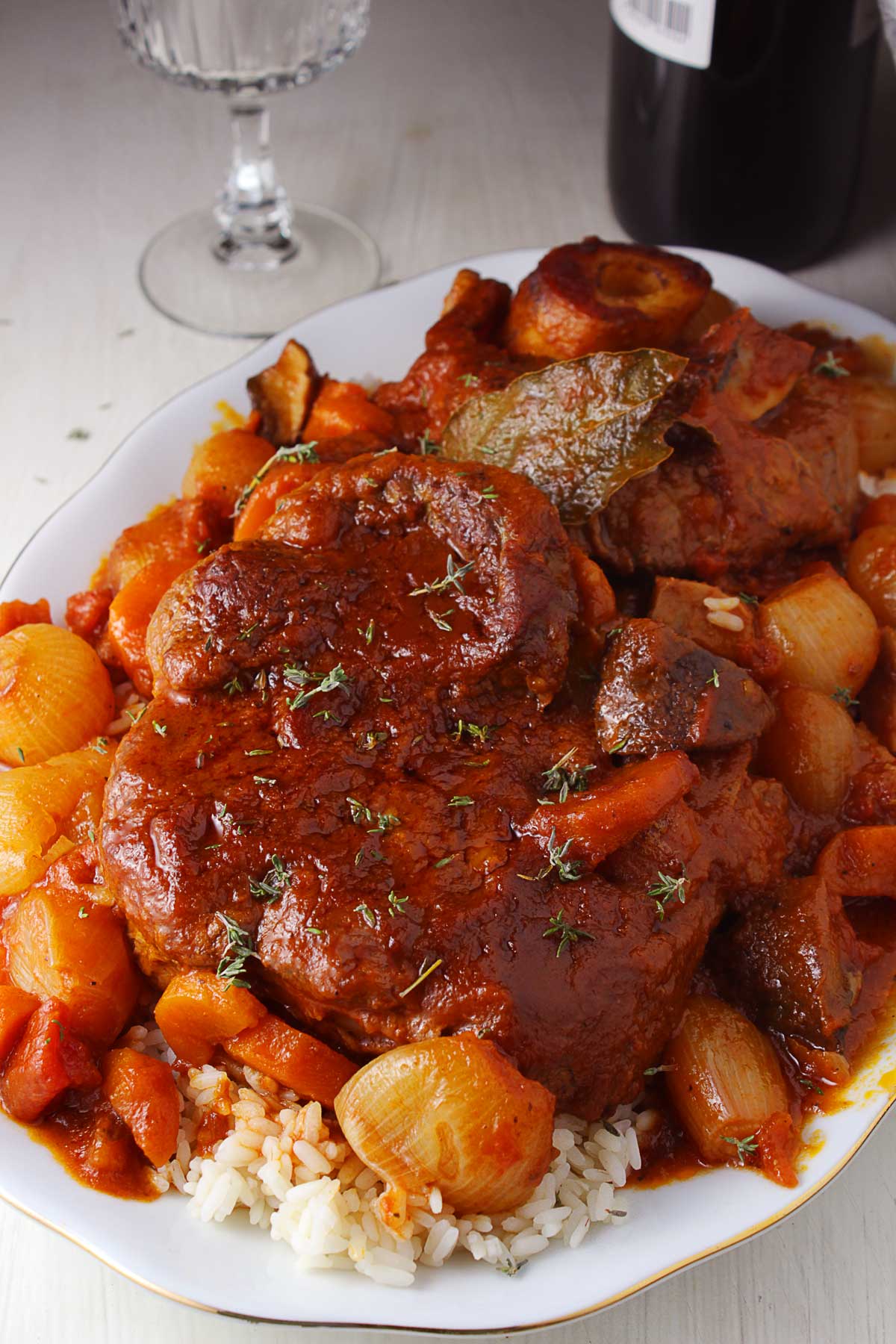
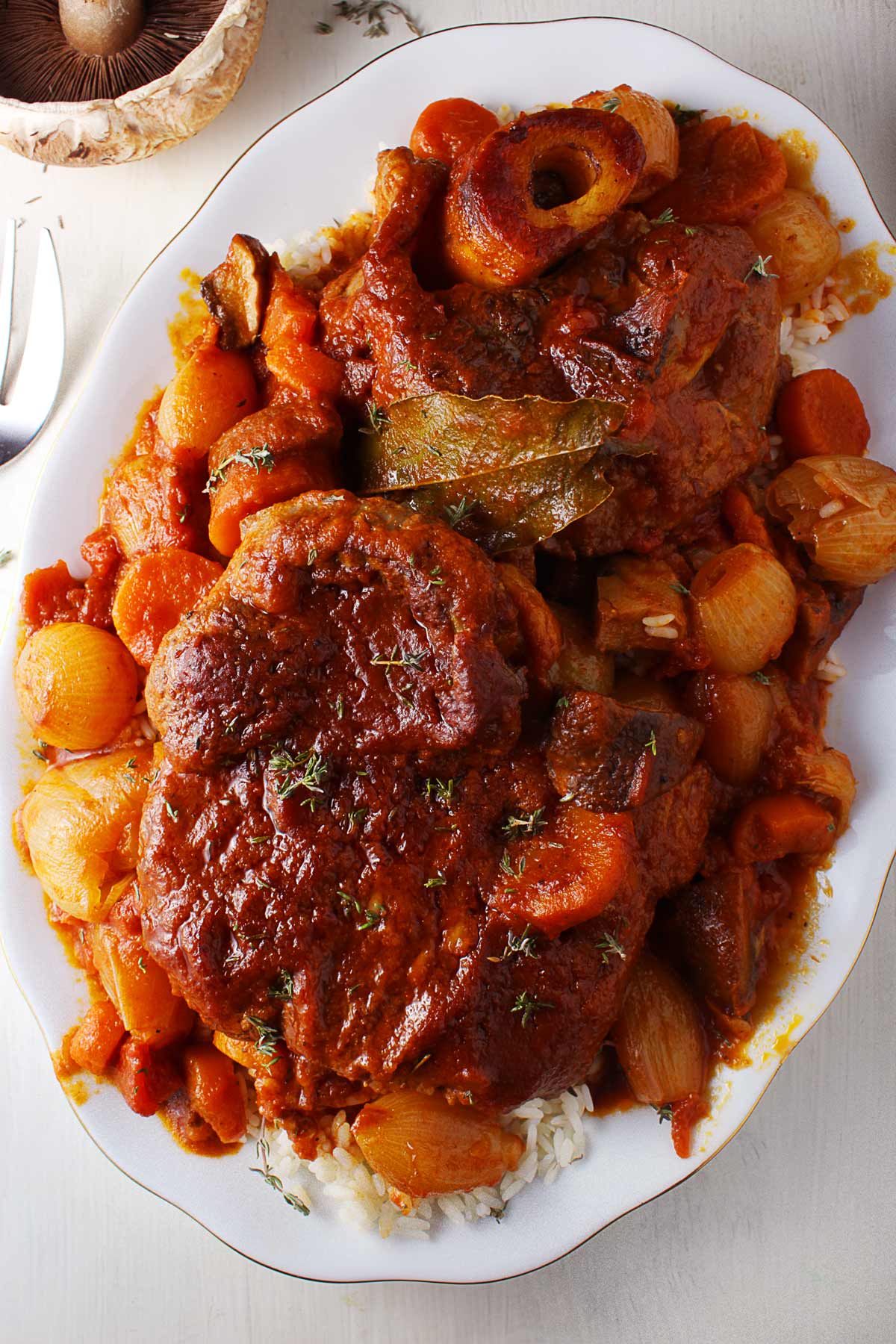
This braised beef shanks with shallots is a fork-tender meal that tastes like it simmered in a restaurant kitchen all day, except it was just your stovetop doing the work. And the best part? You don't need the oven, ten pans, or a culinary diploma. Just one sturdy pot, a bit of heat, and the timeless spirit of Greek cuisine.
Jump to:
- What are braised beef shanks
- What is Greek stifado
- Why this recipe works
- The Mediterranean way of eating
- The recipe's history
- Key ingredients
- Meal prepping this recipe
- Substitutions and variations
- How to braise beef shanks
- Expert tips
- How Greeks serve braised beef shanks
- How to serve leftovers
- How to store and freeze
- FAQs
- More traditional beef dishes
- Recipe
What are braised beef shanks
Braised Beef Shanks is a rich and comforting dish made by slowly cooking thick cuts of beef shank in a flavorful blend of red wine and tomato sauce until the meat becomes tender and deeply infused with flavor.
This version is inspired by the traditional Greek dish Moshari Stifado (Beef Stifado), which is typically prepared with shallots and aromatic spices. In this twist, hearty mushrooms are added alongside the classic ingredients. This cooking method provides the dish with an earthy depth that complements the rich sauce and melt-in-your-mouth beef.
What is Greek stifado
In Greece, the dishes that contain shallots (or pearl onions) are called stifado (or stifatho). It is actually an onion stew with spices. Greek cooks combine shallots with meats like beef, chicken, and rabbit, as well as fish and seafood like octopus and cuttlefish, and even with ingredients like chestnuts and pumpkin.
So, if you hear beef stifado, octopus stifado, chicken stifado etc, now you know that this dish contains shallots as one of its main ingredients. This can be a valuable tip for your next trip to Greece. Because if you are lucky to find a stifado dish on the taverna's or restaurant's menu, order it without any hesitation. Mark my words!
Why this recipe works
Beef cuts + low heat + moisture = tenderness: Braising transforms beef shanks into melt-in-your-mouth perfection. As the connective tissue breaks down, it releases collagen that turns into gelatin, creating a rich, velvety sauce. Additionally, the bone-in cuts release bone marrow that thickens the sauce and makes it even more flavorful.
Flavor formula (mushrooms = depth and umami) + (shallots = sweetness) = harmonious blend of savory richness and gentle sweetness. Together, they round out the braised beef, giving the final dish a deep, layered flavor that provides a complex, restaurant-quality taste.
One pot, minimal cleanup: Everything cooks together, building layers of flavor while saving you from a pile of dishes. You're welcome.
Even better the next day: Like most braised dishes, the flavors deepen overnight, making leftovers taste even more delicious.
Perfect for any occasion: Elegant enough for a dinner party but simple enough for a cozy weeknight meal, this dish is as versatile as it is satisfying.
If you love beef dishes, Greek cuisine has plenty more to offer. From the classic soutzoukakia (meatballs in tomato sauce) to rustic pastitsada (braised beef) and comforting moussaka, there's a cozy dish for every taste.

The Mediterranean way of eating
Braising might sound French, but the Mediterranean world has been doing it forever - they just didn't call it "braising." Across Greece, Italy, and Spain, home cooks simmer inexpensive cuts with vegetables, herbs, and olive oil until everything tastes like it should.
This recipe follows that same principle. Instead of heavy butter or cream, we use extra virgin olive oil, fresh herbs, red wine, and tomato sauce for brightness. The focus is on balance: rich but not greasy, comforting but still fresh. It fits neatly into the Mediterranean way of eating - whole ingredients, moderate portions, and flavor that comes from time, not shortcuts.
The recipe's history
Not interested in food history? No problem! Jump to Recipe
As mentioned before, the dishes that contain shallots are called stifado in Greece.
Stifado is a dish deeply rooted in Greek tradition, with a history that bridges the East, the West, and everyday Greek cooking. Its name is believed to come from the Italian stufato or stufata, meaning "braised" or "slow-cooked," referring to the technique of simmering food gently in a closed pot.
However, similar dishes also appear in Eastern cuisines, where the Persian word yahni describes stewed dishes cooked in their own juices-always featuring onions as the key ingredient.
In Greece, stifado gained special cultural and symbolic meaning, closely tied to village feasts and religious celebrations. During these festivals, it is traditionally cooked overnight in large cauldrons, filling the air with rich aromas, and served the next day to the gathered faithful in honor of the saint. The defining element of the dish is the small onions (we call them "kokkaria"), which lend sweetness, depth, and a beautiful round shape to the stew.

Key ingredients
Beef shanks: Look for meaty pieces with visible marrow in the bone - that's the secret to rich flavor.
Mushrooms: I used portobello mushrooms, which are perfect for this recipe. However, all kinds can be used. Ideally, a mix (cremini, shiitake, oyster, porcini) adds complexity.
Shallots or pearl onions: A basic ingredient for this recipe. We need the perfect sweetness and its satisfying texture.
Garlic: No Mediterranean braise works without the combo garlic-onion.
Carrots: I like their earthy and sweet taste. Plus, more veggies in my food is a win-win!
Tomato Paste: Concentrated sweetness to anchor the sauce.
Tomatoes: Fresh or canned tomatoes work just fine.
Sugar: Optional, but I recommend adding it if the tomatoes aren't too sweet.
Good quality dry red wine: Choose a dry red wine you'd actually enjoy drinking - something like a Pinot Noir, Merlot, or any full-bodied dry red of good quality. Always taste it before adding it to the stew: if you like it in your glass, you'll love it in your pot. (And yes, feel free to sip the rest while cooking. Just saying!)
If you're avoiding alcohol or serving the dish to kids, you can skip the wine altogether and substitute it with red wine vinegar. Use about ¼ cup of red wine vinegar for every 1 cup of wine, and balance the acidity with a bit of extra stock or water if needed.
Fresh herbs: Thyme, bay leaf, or rosemary (optional. My clan doesn't like rosemary too much, so I used only thyme) work beautifully.
Olive oil: For searing and layering flavor.
Rice: Serve with rice like in this recipe, or see more options below.
Meal prepping this recipe
This dish is practically made for meal prep because the flavor only improves after a night in the fridge. Here's how to plan it smartly:
Day 1: Braise the beef shanks. Let the pot cool, and refrigerate overnight.
Day 2: Reheat gently, and enjoy.
This way, the sauce will have thickened and mellowed.
My mother uses another prep method. She browns the meat and the rest of the ingredients the previous day, refrigerates and the following day she braises it. This way, the flavor is more intense, and she serves it fresh out of the pot. Your kitchen will smell like someone's yiayia moved in.
Substitutions and variations
Flexibility is the friend of any home cook:
No beef shanks? Use short ribs, oxtail, or chuck roast cut into large chunks.
No wine? Add ¼ cup of red wine vinegar to mimic acidity and sweetness.
Want it lighter? Use chicken or rooster for a gentler flavor.
Are you a vegetarian/vegan? Replace beef with thick slices of eggplant and use more mushrooms. It's not traditional, but it works surprisingly well.
Need more vegetables? Celery, peppers, or even a handful of greens (like spinach at the end) make it heartier and healthier. Still not the traditional Greek stifado, but, hey, your dish, your way!
How to braise beef shanks
Here's the step-by-step breakdown. Cook with me!
Prepare the shallots/pearl onions (optional). Cleaning shallots or pearl onions can be tedious and time-consuming. So, here is a simple way to clean them faster and save some tears along the way.
Trim both ends of the onions, blanch them for 1-2 minutes, drain, rinse under cold water, and then gently squeeze each one between your fingers. You'll see the skins slip off effortlessly.
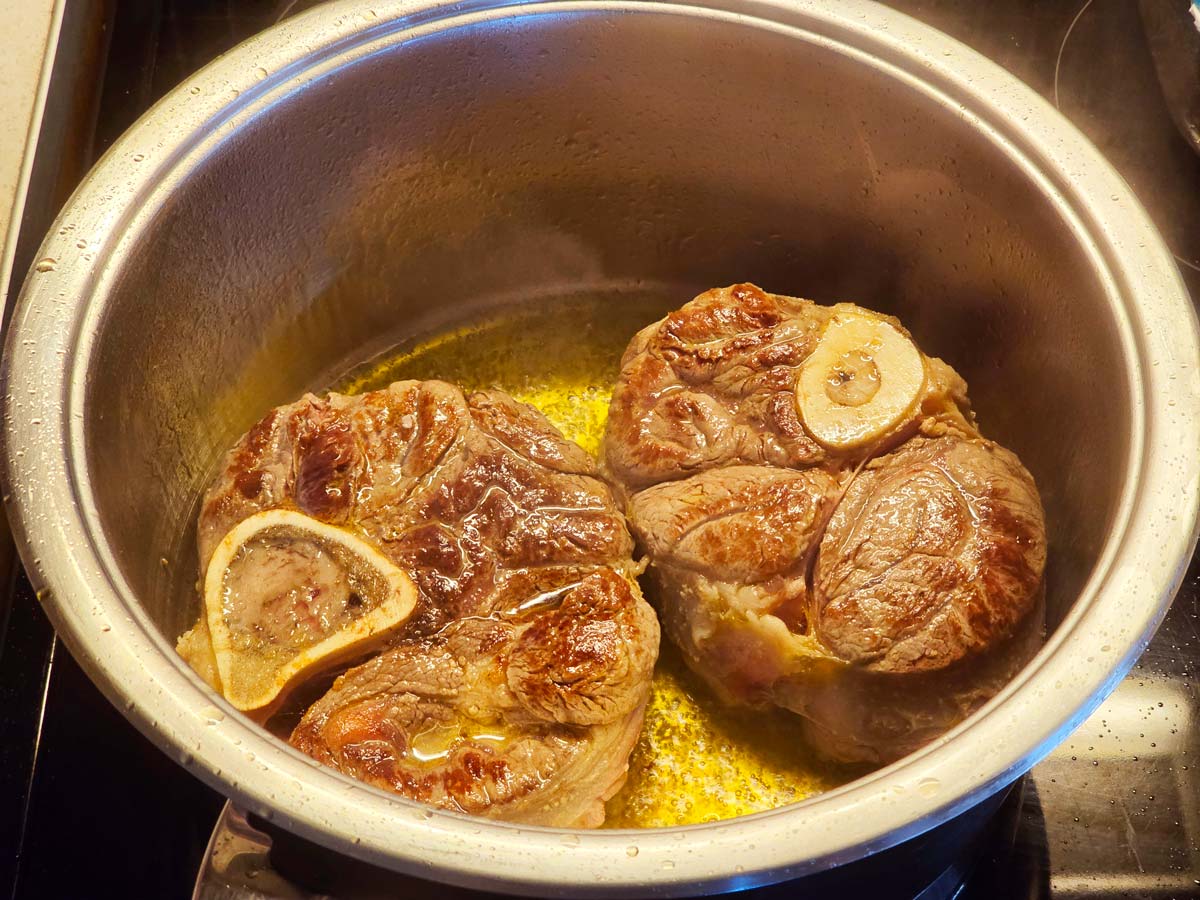
Sear the beef shanks (Step#1)
Pat the beef shanks dry and season with salt and pepper. Heat the olive oil in a heavy pot over medium-high heat. Brown the shanks well on both sides.
Work in batches when searing the beef shanks because overcrowding the pot will steam the meat instead of browning it. Remove them from the pot and set aside.
Add the vegetables (Step#2)
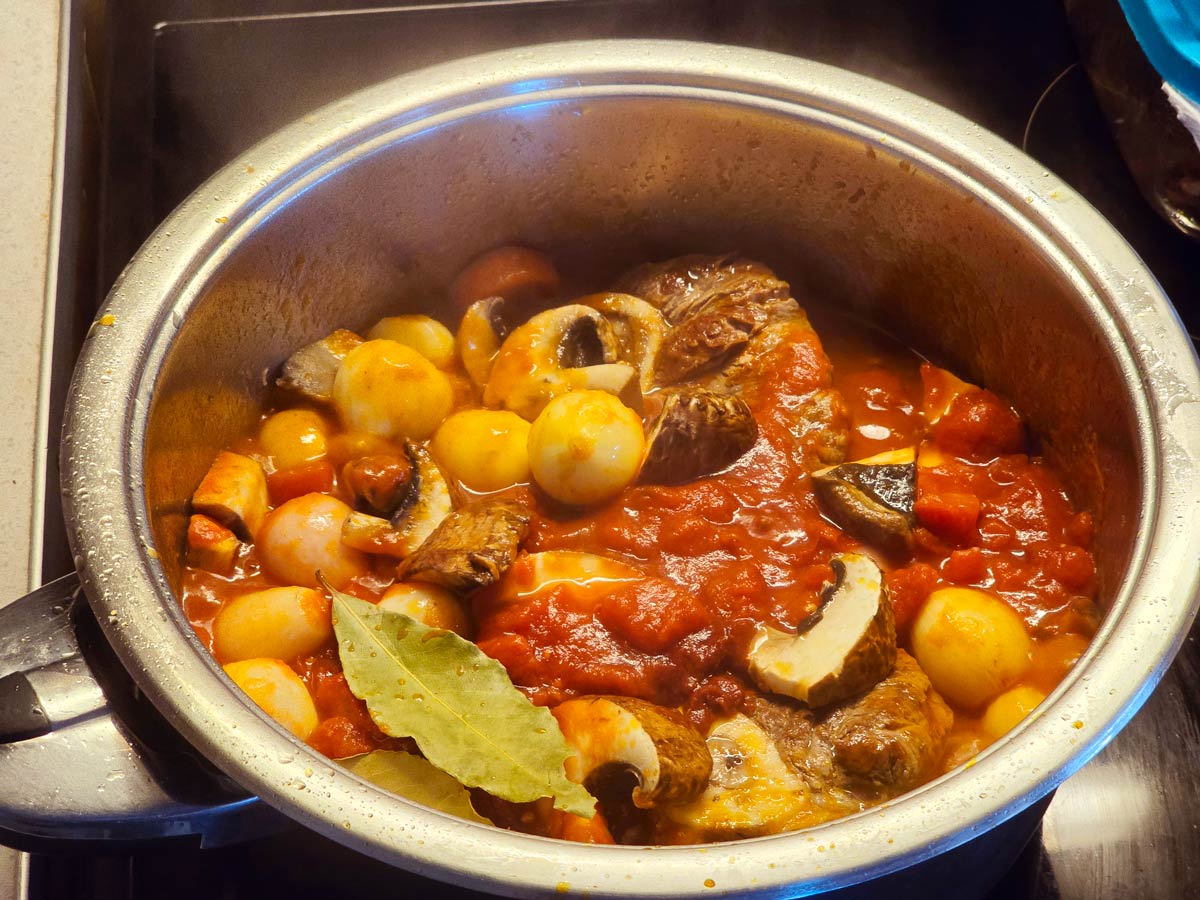
In the same pot, add the carrots and the garlic cloves to the pot and sauté briefly to begin softening.
Stir in the mushrooms and let them release their juices and take on some color. Season with salt and pepper, to taste.
Add the shallots or pearl onions and continue to sauté until the vegetables are lightly browned.
Stir in the tomato paste and give a few turns. Then the tomatoes (canned or fresh), the sugar (optional), bay leaves, and rosemary (optional).
Deglaze and simmer (Step#3)
Deglaze the pot with the red wine, scraping up any browned bits from the bottom. Let the alcohol reduce briefly. Pour in water or stock, stir to combine, and bring the mixture to a gentle boil.
Place the beef shanks in the pot and incorporate them with the rest of the ingredients.
Reduce the heat to low, cover the pot, and let the stew simmer very gently, until the meat is tender and the sauce has concentrated and become silky.
Uncover for the last portion of cooking if you want the sauce to reduce further and intensify. Adjust seasoning with salt and pepper.
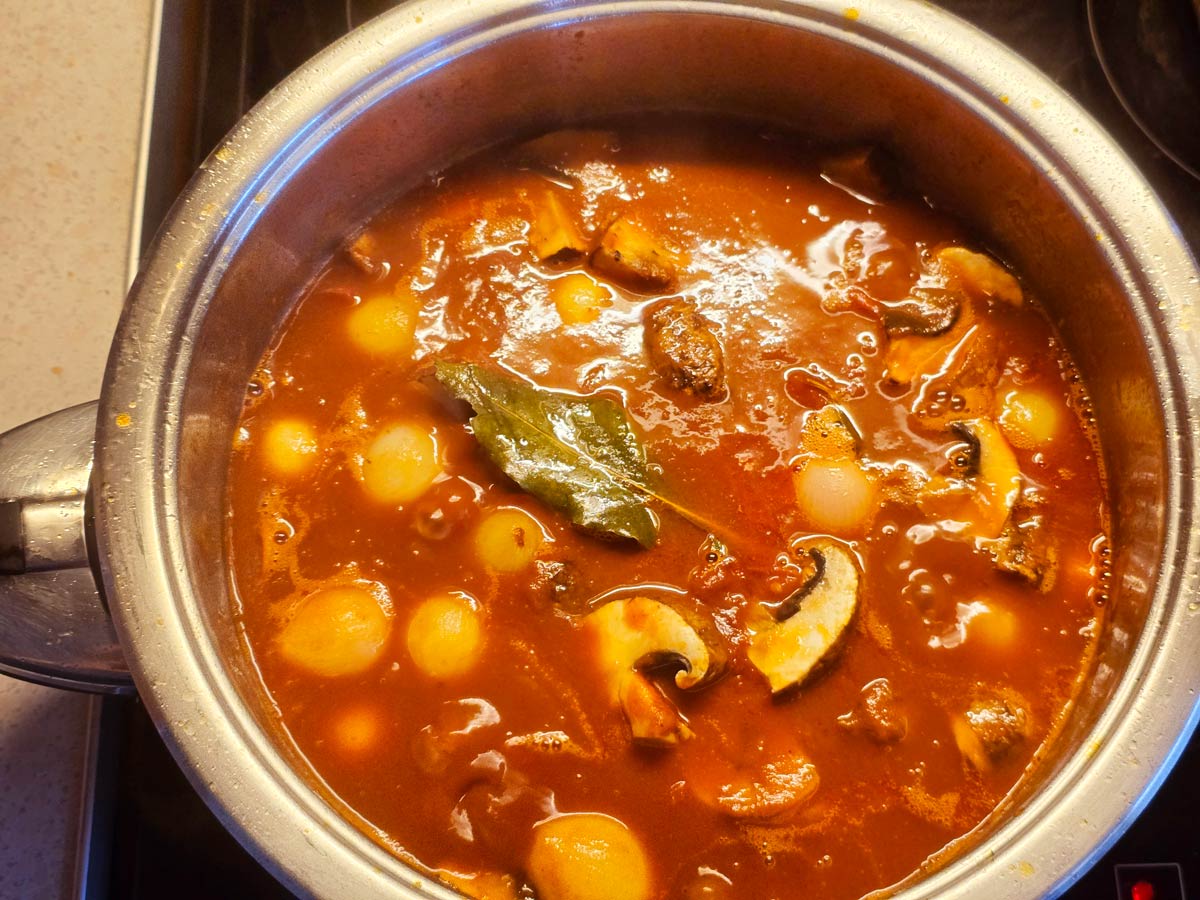
Serve (Step#4)
Let the stew rest for a few minutes before serving. Serve with fries, mashed potatoes, rice, pasta, crusty bread, and garnish with fresh thyme if desired.
That's it. Minimal work, maximum reward.
Expert tips
Don't rush the sear. A proper browning sets the tone for the entire dish.
Keep it low and slow. Boiling ruins the texture - a quiet simmer is your friend.
Marrow magic. Purchase in-bone beef shanks and allow the marrow to melt while simmering. It makes an incredible, silky heaven.
Rest before serving. Like all braises, it tastes better if you let it sit for 15 minutes before plating.
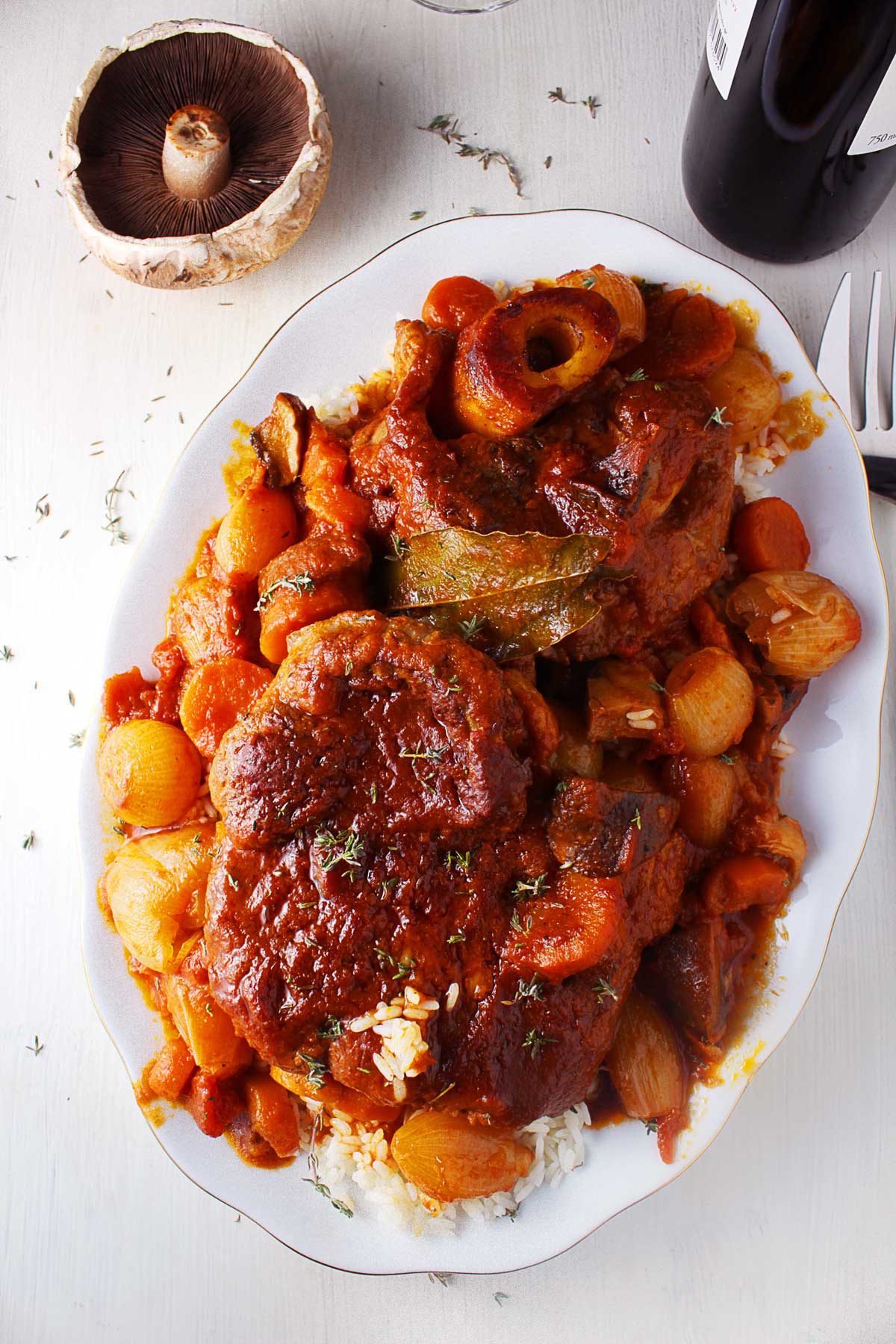
How Greeks serve braised beef shanks
In Greek homes, this kind of braised beef "moshari stifado" is served in various ways.
Serve it with fries: Now, fries take the dish on another level! It is the most popular option because Greeks love fries cooked in olive oil. It is kind of a national passion.
Imagine their taste as soaking up the sauce like a sponge. It is heaven on a fork and ... a nightmare on your waist! I know. But once in a while, like 2-3 times per year, I allow myself to enjoy this amazing combo.
Serve it with rice: I prefer rice because it is a lighter option. Even though brown rice is better, my sons and hubby disagree. Oh well!
Serve it with mashed potatoes: I love this option. Mashed potatoes are so good with meat and simmered red sauces. Just take a look at this chicken meatball dish. Oh my!!!
Serve it with pasta: In Greece, beef stifado usually lands on the table with bucatini pasta. To give you an idea of a similar dish, look at this traditional beef dish from Corfu.
A loaf of good, crusty bread is mandatory. The sauce is half the point.
Additionally, you should never forget the salad. Choose between a simple green salad with lettuce and a traditional cabbage salad for the cold days. As for the summer, a Greek salad is a must, or a cucumber salad for more variety on your table.
Finally, if you really want to serve your dinner like a Greek, you should serve a pie. It sounds time-consuming, but it doesn't have to be this way. Make this easy rustic flour pie that takes -what?- 10 minutes to prepare and 30 minutes to bake?
Wine pairing? A medium-bodied red, like Agiorgitiko or Merlot, complements the dish without overwhelming it. (Let's assume there is some wine left from the one you added to the stew. If not, no worries! Open another bottle lol).
How to serve leftovers
Leftover braised beef shanks might actually be the best version of it.
Pile it on toasted bread for a rustic sandwich with a drizzle of the sauce. It can be served over pita bread, too.
Warm it up with a splash of broth to make a rich soup base.
Serve it over Greek fava or polenta for an easy next-day meal.
If the sauce thickens too much, just loosen it with a bit of water or stock while reheating.
How to store and freeze
Refrigerate: Let the dish cool completely, then store in an airtight container. Keeps well for up to 4 days.
Freeze: Transfer portions (with some sauce) to freezer-safe food containers or bags. It'll keep for up to 3 months.
Reheat: Thaw overnight in the fridge, then reheat gently on the stovetop over low heat. Add a splash of broth or water to loosen the sauce. Avoid microwaving straight from frozen - the texture will suffer. Gentle heat is key.
FAQs
Trim both ends of the onions, blanch them for 1-2 minutes, drain, rinse under cold water, and then gently squeeze each one between your fingers. You'll see the skins slip off effortlessly.
Cooking time varies with the cut and size of the meat. It takes from 1 to 2 ½ hours on the stove, a little bit more in the oven. Cook slowly until the meat is fork-tender and the sauce is rich and glossy.
Yes, though you'll lose a bit of depth. Replace it with a splash of red wine vinegar.
Absolutely. After deglazing and adding liquid, cover and transfer the pot (or to an oven-proofed pot with lid) to a 300°F (150°C) oven for 2½-3 hours. The oven gives more even heat, but the stovetop works perfectly.
It just needs more time. Tough meat doesn't care about your schedule. Keep it simmering gently, and it will eventually surrender.
You can. Brown everything first, then transfer to the slow cooker with your liquids and cook on low for 7-8 hours. But honestly, stovetop braising gives better texture and control.
More traditional beef dishes
If you liked this braised beef shanks with shallots, try:


I would love to hear your feedback. It keeps my kitchen alive and my spirits high. Save this recipe and leave your rate and comment below, or take a photo of your braised beef shanks and tag me on Instagram with #30daysofgreekfood and Facebook with @30daysofgreekfood.
Recipe
Braised Beef Shanks with Shallots
Ingredients
- 3.3-4.4lb (1.5-2kg) beef shanks, in bone
- 4 tablespoons olive oil
- 3 carrots, cubed or sliced
- 4 cloves garlic, minced
- 10.5oz (300g) Portobello mushrooms or mixed mushrooms, roughly chopped*1
- 1lb (500kg) shallots or pearl onions, peeled*2
- 1 cup (250ml) good quality dry red wine (Pinot Noir, Merlot, etc)*3
- 1 ½ cups, 14 oz (400g) canned tomato, crushed or diced, or 1lb (500g) about 3 medium ripe fresh tomatoes, grated or finely chopped
- 2 tablespoons tomato paste
- 1 tablespoon granulated sugar
- 1⅔ cups (400ml) water or broth
- 1-2 bay leaves
- Rosemary, fresh or dry, to taste (optional)
- Fresh or dry thyme, for serving (optional)
- Salt and freshly ground black pepper, to taste
Instructions
SEAR THE BEEF
- Pat the meat dry and season with salt and pepper.
- Heat the olive oil in a large, heavy pot over high heat until hot but not smoking. Add the beef shanks and sear for a few minutes on all sides until deeply golden.
- Work in batches when searing the beef shanks. Overcrowding the pot will steam the meat instead of browning it.
- Remove the beef from the pot and set aside.
ADD THE VEGETABLES
- In the same pot, stir in the carrots and the garlic, and sauté briefly. Add the mushrooms and continue cooking until they begin to soften and release their juices. Season with salt and pepper, to taste.
- Add the shallots or pearl onions and cook for a few minutes, stirring occasionally, until they take on a little color. Reduce the heat slightly, if needed.
- Add the tomato paste and stir a few times to incorporate. Stir in the canned (or fresh) tomatoes, sugar, bay leaves, and rosemary (optional). Stir to combine.
DEGLAZE AND BUILD THE SAUCE
- Pour in the red wine and let it simmer for 2-3 minutes, scraping the bottom of the pot to release any browned bits. Add the water or broth.
- Place the beef shanks in the pot and incorporate them with the veggies.
SIMMER
- Bring to a gentle boil, then reduce the heat to low. Cover with a lid and let the stew simmer very gently for about 1 - 2 ½ hours, stirring occasionally. Cooking time varies with the cut and size of the meat.
- Uncover for the last portion of cooking if you want the sauce to reduce further and intensify. Adjust seasoning with salt and pepper.
- It is ready when the meat is fork-tender and the sauce is rich and glossy. If the sauce reduces too much, add a little extra water or broth.
SERVE
- Remove from heat and let rest for 15 minutes. Serve warm with rice, fries, mashed potatoes, pasta, and crusty bread. Sprinkle with fresh thyme if desired.
Notes
- I used Portobello mushrooms, but any mushroom works just fine. The flavor is even better with a mix of mushrooms.
- If you trim both ends of the onions, blanch them for 1-2 minutes, drain, rinse under cold water, and then gently squeeze each one between your fingers, you'll see the skins slip off effortlessly.
- If you're avoiding alcohol or serving the dish to kids, you can skip the wine altogether and substitute it with red wine vinegar. Use about ¼ cup of red wine vinegar for every 1 cup of wine, and balance the acidity with a bit of extra stock or water if needed.

Leave a Reply